Research navigation
Industrial AI Readiness research assets.
Open the research hub, framework, assessment method, evidence rules, glossary, executive guide, or benchmark-governance boundary.
Methodology-only governance for how AI2COE would evaluate future Industrial AI Readiness benchmark reporting, including evidence thresholds, inclusion rules, confidence controls, review requirements, and publication boundaries.
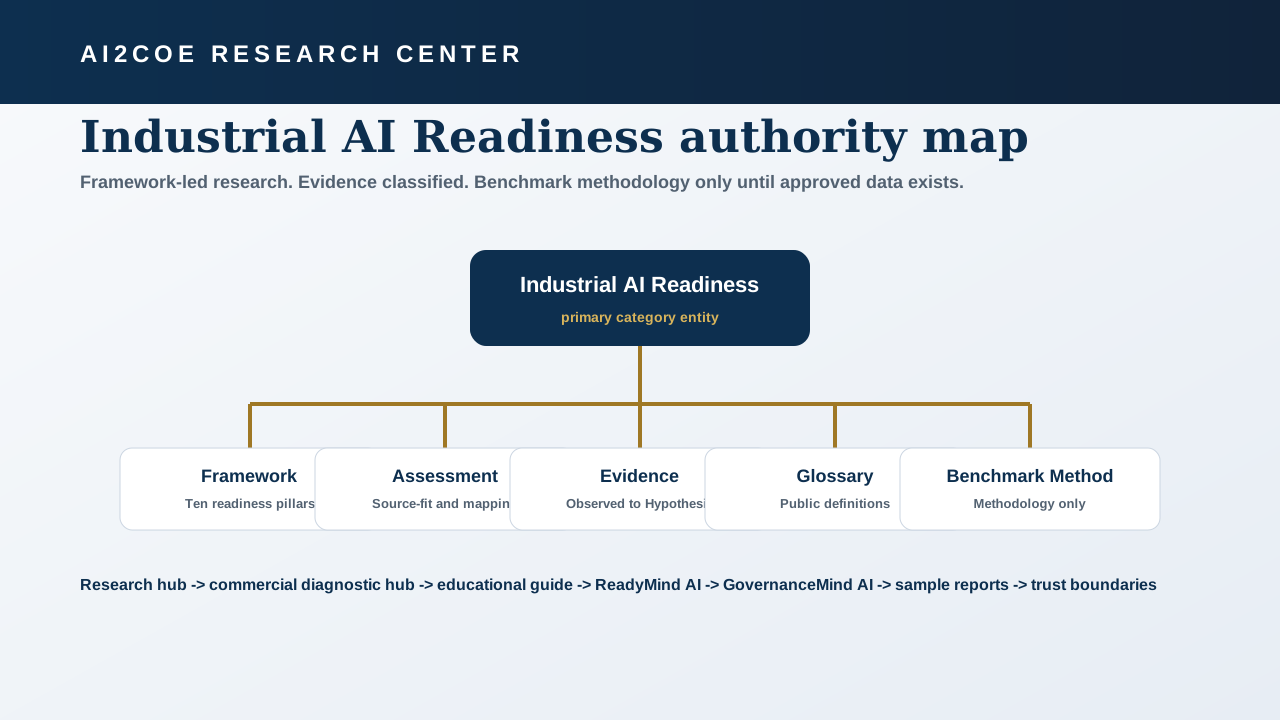
Industrial AI Readiness Future Benchmark Governance: AI2COE research frames the operating hypothesis, assumption boundary, and diagnostic path needed before transformation spend. Methodology-only AI2COE page explaining future Industrial AI Readiness benchmark governance rules, evidence thresholds, inclusion rules, review controls.
Run Free Industrial IQ SnapshotOpen the research hub, framework, assessment method, evidence rules, glossary, executive guide, or benchmark-governance boundary.
Industrial AI Readiness Future Benchmark Governance defines how future benchmark reporting would be governed before any public measurement is published. It covers evidence thresholds, data eligibility, inclusion and exclusion rules, confidence controls, owner review, aggregation, anonymization, publication approvals, versioning, and limitations.
This page does not rank companies, sectors, countries, or industries.
This page does not provide cross-market average scores or maturity levels.
This page does not use buyer-derived examples as public evidence without approval and review.
This page does not promise financial return, cost reduction, EBITDA impact, or payback.
This page does not create security, regulatory, audit, ISO, SOC, SAP, or other certification status.
Approved diagnostic outputs with evidence class, confidence tier, source-fit status, owner-review status, and publication approval.
Aggregated readiness dimensions where data handling, anonymization, and inclusion rules are documented.
Source-fit, field-completeness, evidence-classification, and review-state metadata when scoped for benchmark methodology.
Raw uploaded source files, private operational records, buyer-identifiable rows, unapproved owner notes, and unsupported financial assertions.
Hypothesis-only ideas, unreviewed findings, weak source-fit outputs, private contracts, credentials, or confidential buyer context.
Estimated planning values presented without assumptions, review limits, or replacement by approved observed evidence.
Future benchmark methodology should group only approved, scoped, comparable readiness dimensions. It should avoid mixing unlike industries, source systems, or diagnostic contexts without explanation.
Public reporting should remove buyer-identifying details and avoid exposing raw operational records, supplier details, source rows, or confidential context.
Cohorts should be defined by relevant industrial context such as asset intensity, source-system type, readiness pillar, evidence class, and diagnostic scope.
Small samples should be labelled carefully or withheld from public reporting when identification or misinterpretation risk is high.
Research and methodology home for Industrial AI Readiness.
Related routeTen-pillar framework for readiness evaluation.
Related routeSource-fit, field mapping, confidence tiers, and owner review.
Related routeObserved, Derived, Estimated, and Hypothesis evidence classes.
Related routePublic-safe definitions for readiness, evidence, source exports, and review terms.
Related routeExecutive decision guidance before AI adoption or modernization spend.
Related routeCommercial diagnostic path for assessing Industrial AI Readiness through Industrial IQ.
Related routeIntroductory guide to the category and why it matters.
No. This methodology governs possible future benchmark reporting and does not publish measured benchmark outputs.
This page does not claim that a public market benchmark exists. Public benchmark reporting would require approved evidence thresholds, data handling rules, review controls, and publication limits.
Observed evidence with clear source fit, owner review, confidence tiering, aggregation rules, anonymization controls, and approval is the strongest candidate for public reporting.
Estimated findings should remain planning context unless replaced by approved observed evidence and reviewed under the methodology rules.
Owner review helps determine whether a finding is accepted, rejected, deferred, or escalated. That review state affects whether evidence should be aggregated or withheld.
Limitations should be visible in every public artifact, including scope, evidence classes, excluded data, confidence limits, cohort rules, and version history.
No. Public methodology should rely on approved, aggregated, and scoped metadata or outputs, not raw private source files.
It prevents readiness research from overstating evidence and gives executives a governed path from methodology to future public reporting.