Compatible with SAP  ·  IBM Maximo  ·  Oracle ERP  ·  Hexagon EAM  ·  Infor  ·  Any CMMS — Review data requirements →
Asset-Intensive Operations

Anonymized MRO Catalog Diagnostic: From Duplicate Records to Executive Evidence

An anonymized diagnostic-style case study showing how Industrial IQ turns exported MRO catalog, inventory, procurement, asset, and work-order data into source-backed executive evidence.

RepresentativeAnonymized pattern
Diagnostic-firstEvidence before remediation
Source-file purgeAfter report generation
Executive takeaway

Decision summary

Anonymized MRO Catalog Diagnostic Case Study: Use this decision brief to connect the operating question, available source data, evidence expected, review boundary, and next Industrial IQ action. An anonymized Industrial IQ diagnostic-style case study showing duplicate records, field mapping, confidence tiers, executive evidence, and no ERP write-back.

Run Industrial IQ Snapshot
Who should use itThe buyer or operating owner responsible for the risk described on this page.
Data requiredOperational CSV exports, item master fields, inventory, procurement, asset, work-order, finance, readiness, or governance data depending on the page.
Output producedSource-backed evidence, scores, confidence tiers, report outputs, action tracking, score history, and governance context.
Best next stepRun Industrial IQ Snapshot and select the diagnostic engine that matches the operating question.
Operating context

What the buyer is trying to decide.

An asset-intensive operator had a multi-site MRO catalog shaped by years of ERP/EAM exports, local naming conventions, supplier aliases, inconsistent UOM values, and low-movement stock. The buying committee did not need another generic cleanup opinion; it needed a defensible evidence pack showing which records deserved review before MDM, ERP migration, inventory optimization, procurement action, or AI adoption spend.

CFOCOOCIO / CTOCISOProcurementMaintenanceERP / Data Governance
Control evidence
  • Anonymized diagnostic-style case study
  • No customer logos or named-client claims
  • No ERP write-back
  • Source files purged after report generation
  • Summary and audit metadata may be retained for governance
Before / after diagnostic posture

The change AI2COE is meant to create inside the buying committee.

Before diagnostic
Catalog postureDuplicate descriptions, UOM drift, manufacturer ambiguity, and obsolete candidates reviewed manually
Decision pressureCFO, COO, CIO, procurement, and maintenance needed a single evidence view
System boundaryNo appetite for ERP write-back or uncontrolled master-data change
After diagnostic
Evidence modelFindings grouped by reason code, confidence tier, value signal, and owner
Executive outputBoard-ready summary, evidence table, action queue, assumptions, and exclusions
Governance postureNo automatic deletion, no blind merge, and human review before action
Situation

The buyer needed a fact base before committing to cleanup or transformation.

Duplicate material descriptions, inconsistent UOM values, OEM/manufacturer ambiguity, low-movement records, emergency-buy exposure, and working-capital leakage were visible symptoms. The hard question was which records, sites, suppliers, and part families should be reviewed first.

Evidence boundary: This page is an anonymized diagnostic-style case study. Metrics are sample/anonymized unless separately documented. It is not a named customer endorsement or guaranteed savings claim.
Data used

Exports a buyer can prepare without production integration.

FileTypical fields
Material master exportMaterial ID, description, manufacturer, manufacturer part number, UOM, plant, storage location, category.
Inventory balance exportStock quantity, unit cost, total value, last movement, site, criticality, safety stock where available.
Purchase history exportSupplier, PO date, quantity, unit price, emergency-buy flag, contract ID, lead time.
Optional asset registerAsset ID, equipment hierarchy, criticality, location, equipment type, asset status.
Optional work-order historyWork order, asset, part used, failure code, priority, downtime, maintenance type.
Diagnostic workflow

From exported records to executive evidence.

uploadfield mappingsource-fit scorenormalizationduplicate detectionconfidence tieringevidence reviewexecutive reportaction tracker
Findings model

What the evidence table makes visible.

Finding typeEvidence usedConfidence signalBusiness impactOwner
Semantic duplicatesDescription, manufacturer, MPN, UOM, plant, stock valueHigh agreement across identifiers and descriptionsCleanup priority and duplicate capital reviewERP / Data owner
UOM inconsistenciesUOM, purchase quantity, stock quantity, supplier pack sizeUOM mismatch creates low or medium confidencePrevent unsafe merge and route to reviewMaterials / Procurement
Obsolete candidatesLast issue date, last purchase date, stock value, usage historyLow movement and aged value signalAging, write-off, or disposition reviewCFO / Inventory
Supplier ambiguitySupplier name, supplier ID, manufacturer, PO historyAlias or preferred-supplier uncertaintySupplier rationalization queueProcurement
Critical-spares governance gapAsset register, BOM, criticality, inventory balance, work-order usageAsset-to-part evidence missing or incompleteCritical-spare readiness reviewMaintenance / Reliability
Executive output

The case study shows the report pack a pilot should produce.

  • duplicate risk summary and capital exposure bands
  • remediation queue with confidence tiers and reason codes
  • assumptions, exclusions, and data-quality limitations
  • recommended next actions for finance, procurement, maintenance, and ERP/data owners
What was not done
No ERP write-backIndustrial IQ produced evidence only.
No automatic deletionRecords were not removed, merged, or overwritten.
No blind mergeReview-sensitive findings stayed with human owners.
No savings guaranteeValue remains a buyer-reviewed diagnostic signal until action is approved.
Buyer relevance

Why this matters to the buying committee.

CFOCapital exposure, carrying cost, duplicate inventory, and finance-review assumptions.
COOUptime, site risk, maintenance execution pressure, and operating continuity.
CIO / CTOLow-risk diagnostic before ERP migration, MDM scope, or AI adoption investment.
CISORead-only export-first approach, source-file purge, human review, and audit metadata boundaries.
ProcurementSupplier/material rationalization queue, emergency buying, and repeated purchase signals.
MaintenanceAsset-to-part readiness, searchability, work-order spare availability, and critical-spare review.
Recommended pilot path: run a free Snapshot or founder-led pilot, review sample reports, then use the buyer evaluation guide to align finance, operations, technology, procurement, maintenance, and security reviewers.
Product experience

Inspect the upload, mapping, evidence, score, report, and action workflow before private data is uploaded.

These are illustrative Industrial IQ UI previews using sample/demo labels. They show the enterprise workflow buyers should expect: read-only upload, mapped fields, confidence-tiered evidence, executive reporting, and governed action tracking.

Industrial IQ in 2 Minutes
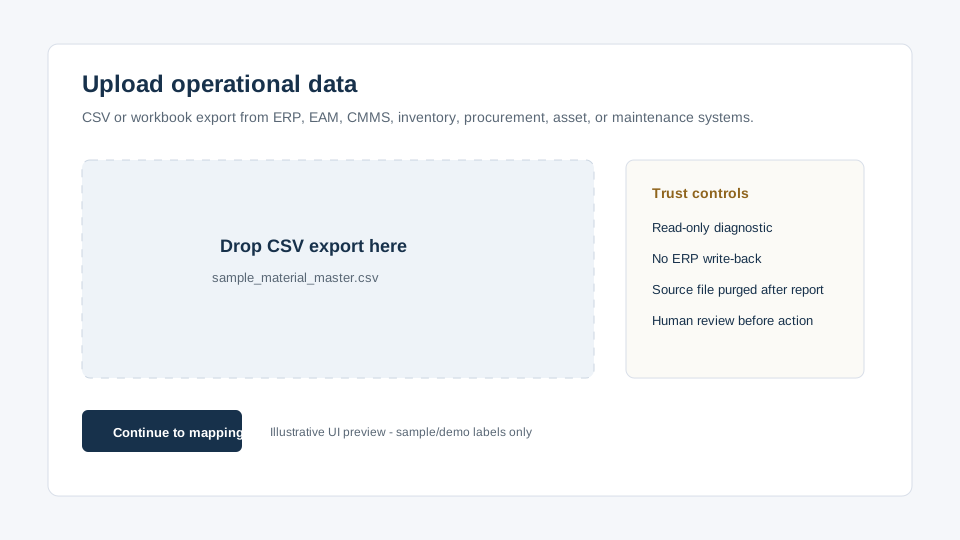
Industrial IQ illustrative upload workflow preview Illustrative product UI preview

Upload operational data

CSV/workbook exports from ERP, EAM, CMMS, inventory, procurement, asset, and maintenance systems. No ERP write-back.

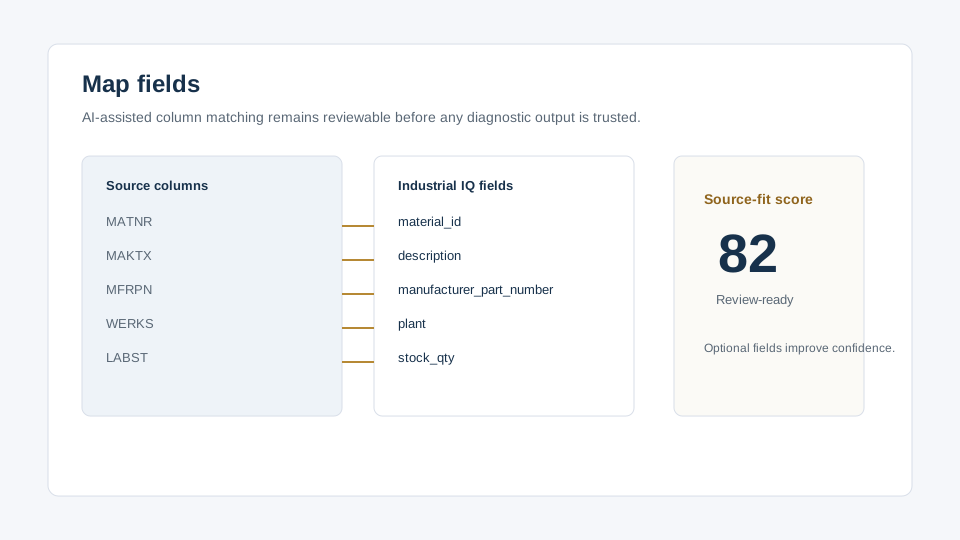
Industrial IQ field mapping preview Illustrative product UI preview

Map fields

AI-assisted column matching exposes required fields, optional fields, source-fit score, and data readiness before the run.

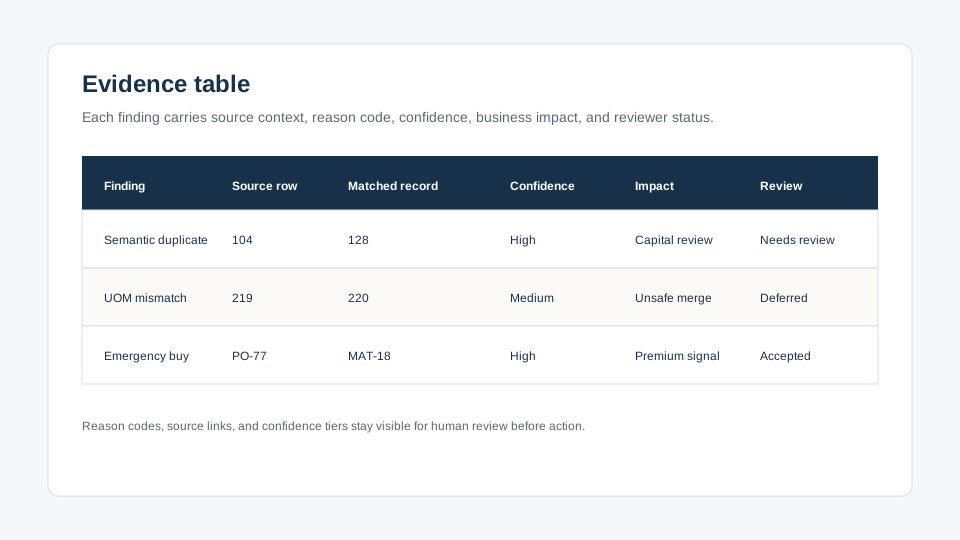
Industrial IQ evidence table preview Illustrative product UI preview

Evidence table

Findings show source row, matched record, reason code, confidence, business impact, and reviewer status.

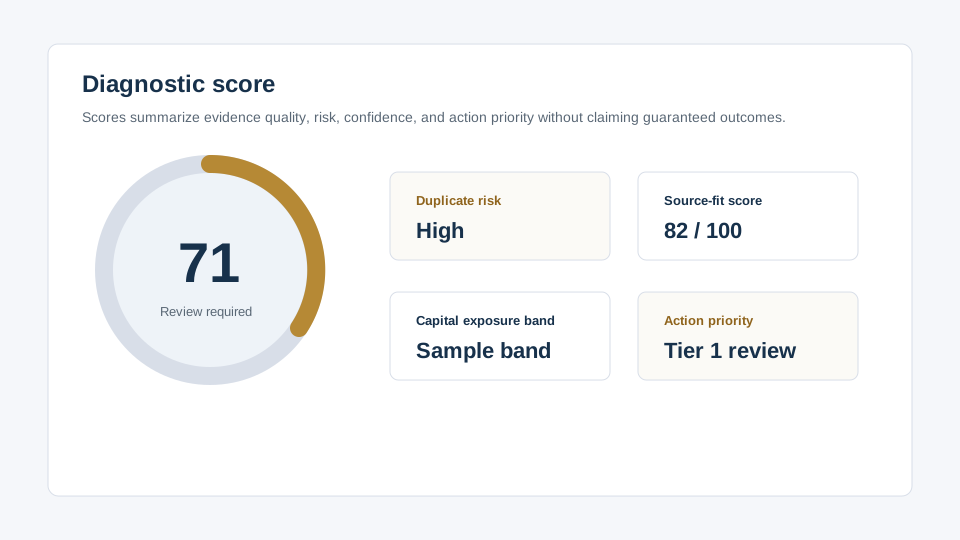
Industrial IQ diagnostic score preview Illustrative product UI preview

Diagnostic score

Score cards separate duplicate risk, source-fit, capital exposure band, and action priority.

Preview boundary: visuals use sample/demo content and do not represent customer data, customer results, or guaranteed savings.

Evaluation assets

Proof, templates, trust, and pilot paths for serious buyers.

Enterprise trust posture

Proof controls buyers expect before they upload operational data.

Source purge Uploaded source files are purged after report generation; summary metrics and Open Findings remain.
No ERP write-back The diagnostic creates evidence for review. It never changes, deletes, merges, or overwrites ERP records.
Local currency Reports display money in the user's selected or country-derived currency, while USD remains the base audit calculation.
Audit trail Report ownership, access, quota, and feedback events are retained for governed review.
Session downloads Excel, Word, PDF, and CSV downloads are available only in the active generation session.
Open Findings Browser findings remain available without retaining the original source catalog rows.
Buyer interpretation

This is the level of evidence a first paid pilot should produce.

The purpose of a PartsCleanse AI pilot is not to claim instant remediation. It is to create a defensible management fact base: duplicate-family count, confidence distribution, capital exposure, data-readiness issues, and a review sequence that executives can govern.

AI2COE Copilot