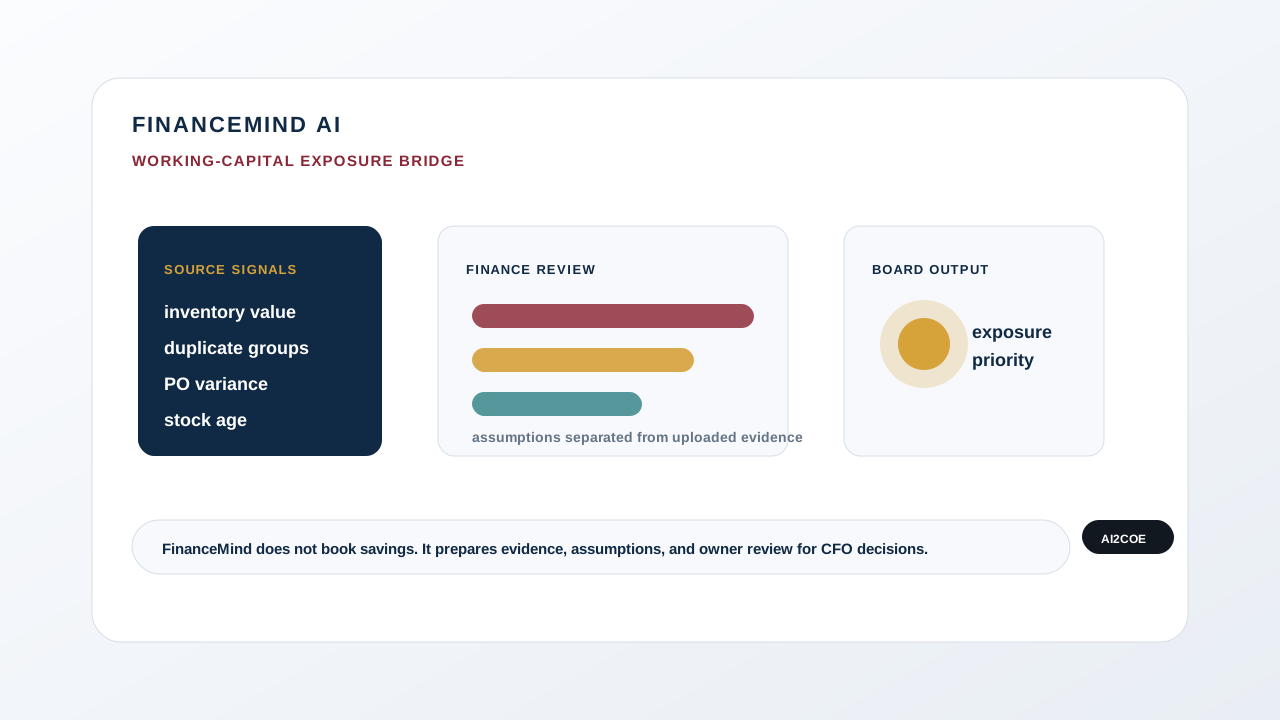
Estimator questions that keep planning outputs evidence-safe.
These answer paths clarify assumption-led planning, evidence standards, source-system boundaries, and the diagnostic step required before a value signal becomes operational evidence.
How should duplicate-inventory exposure estimates be interpreted?
Treat estimator outputs as assumption-led planning signals. They need source records, owner review, confidence boundaries, and sensitivity checks before becoming business-case evidence. Public defaults are not customer-specific findings or assured financial outcomes.
What evidence should executives ask for before industrial AI investment?
Executives should ask for source records, assumptions, exclusions, confidence tier, owner review, limitation notes, and the action boundary. Public methodology, sample reports, and planning models should not be confused with uploaded-data diagnostic findings.
How should buyers compare AI2COE with MDM, EAM, ERP, BI, and consulting alternatives?
Compare the decision boundary: whether the option produces source-linked diagnostic evidence, confidence tiers, owner actions, and no-write-back governance, or whether it primarily manages systems, services, reports, or remediation programs.
Why does material master readiness matter before SAP, Maximo, or AI programs?
Material master quality affects catalog search, duplicate families, inventory trust, procurement visibility, maintenance planning, and ERP migration readiness. AI2COE keeps duplicate candidates, weak descriptions, UOM issues, and manufacturer ambiguity as reviewable signals until owners confirm action.
Which source records should teams prepare before AI diagnostics?
Prepare material masters, inventory balances, purchase orders, asset registers, BOMs, work orders, finance valuation context, readiness records, and governance review history. Each source object needs field meaning and owner context.
Can AI2COE evaluate ERP and EAM data without integration?
Yes. Industrial IQ starts with exported CSV or workbook evidence from systems such as ERP, EAM, CMMS, inventory, procurement, asset, finance, and work-order sources. The diagnostic path is read-only and does not write back to source systems.