Compatible with SAP  ·  IBM Maximo  ·  Oracle ERP  ·  Hexagon EAM  ·  Infor  ·  Any CMMS — Run an Industrial IQ diagnostic →
AssetMind AI | AI2COE Industrial IQ

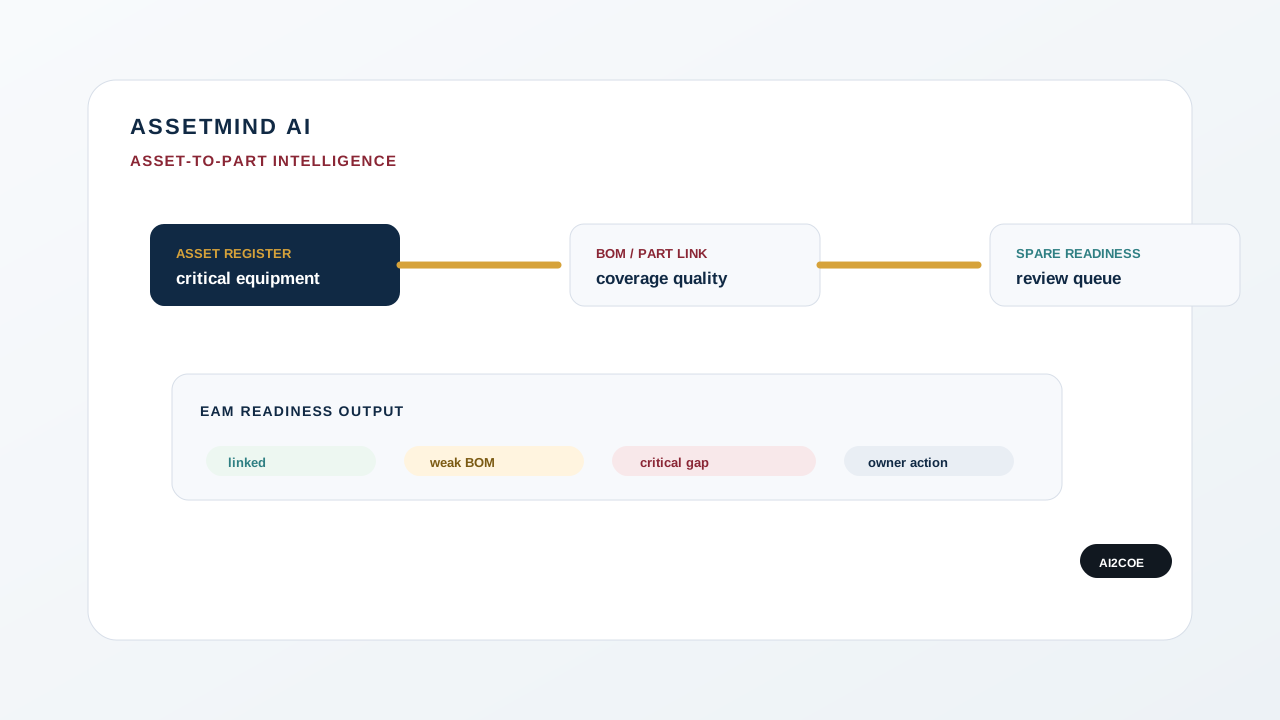
Asset-to-Part Intelligence for asset-intensive operations.

This engine is part of AI2COE Industrial IQ. AssetMind AI turns mapped operational exports into source-backed evidence, confidence tiers, business-impact interpretation, PDF reports, email delivery, action tracking, and recurring score history without ERP write-back.

Business problem

Asset-to-Part Diagnostic.

Asset-to-part linkage, critical spare coverage, obsolete asset spares, and plant risk heatmaps.

The page is not a static brochure. The engine has a working upload, preview, map, validate, analyze, evidence, score, report, action, review, and score-history path inside the Industrial IQ portal.

Buyer ownerAsset Integrity, Maintenance, Reliability, and Operations leaders
Trigger eventERP migration, AI readiness, working-capital pressure, procurement leakage, reliability risk, audit readiness, or recurring operational review.
Input data requiredAsset Id, Description
Upload workflowUpload CSV, preview fields, confirm AI-recommended mappings, validate required coverage, normalize where needed, then run the engine.
Diagnostic logicMap source columns, normalize values, run deterministic engine checks, then attach evidence and confidence before report output.
Sample evidence tablePublic sample mode exposes mapped evidence rows before the customer uploads private data.
Score outputAsset intelligence score: lower values mean weaker asset-to-part linkage, critical-spare coverage, plant relevance, and obsolete-asset-spare control.
Executive report previewSample report pages show the decision narrative, evidence rows, confidence tiers, assumptions, limitations, PDF export, and next actions before private upload.
Report outputAssetMind AI Asset-to-Part Risk Report with HTML, CSV evidence, PDF, and report email status for authenticated runs.
Governance controlsNo ERP write-back, no autonomous supplier outreach, confidence-tier labels, human-review routing, audit metadata, and clear sample-versus-uploaded-data labeling.
Upload workflow

Upload -> Validate -> Analyze -> Evidence -> Score -> Report -> Action -> Repeat.

StepLayerCustomer experience
1UploadCSV export enters the parser. Source file retention rules are disclosed.
2MapERP/CMMS aliases are inferred, then corrected or confirmed by the user.
3ValidateRequired fields, completeness, missing values, and confidence reducers are shown before run.
4AnalyzeEngine-specific analyzers generate findings, evidence, and impact estimates.
5GovernFindings receive confidence tiers and human-review status before any action.
6ReportExecutive report, evidence table, action tracker, and score snapshot are produced.
Required data and field dictionary

Accepted fields, aliases, and mapping expectations.

InputNeedCommon aliasesMeaning
Asset Id Yes asset_id; equipment; equipment_id; asset; tag; functional_location; floc; equipment_tag; asset_tag Equipment, asset, functional location, tag, or plant-register identifier.
Description Yes description; item_description; material_description; maktx; short_text; part_description; long_text; desc Item, part, asset, work-order, finding, or source-record description used by the engine.
Material Id Recommended material; material_id; material_number; matnr; item; item_number; item_id; sku; part; part_number; stock_code Unique material, SKU, item, or spare-part identifier from the source system.
Asset Status Recommended asset_status; equipment_status; status; active_status; retired; lifecycle_status; equipment_lifecycle Asset lifecycle status such as active, retired, inactive, mothballed, or decommissioned.
Criticality Recommended criticality; critical; abc; risk_class; equipment_criticality; asset_criticality Criticality rating for part, asset, work order, or operating risk.
Equipment Class Recommended equipment_class; asset_class; class; equipment_type; asset_type Equipment class, asset type, system, line, unit, or maintainable item category.
Site Recommended site; plant; werks; location; storeroom; warehouse; depot; facility Plant, site, warehouse, storeroom, region, location, or operating unit.
Last Used Date Recommended last_used_date; last_movement_date; last_issue_date; last_work_order_date Last issue, last work-order use, last asset use, or last consumption date.
Quantity Recommended quantity; qty; stock_qty; on_hand; qty_on_hand; unrestricted; labst; stock_on_hand Quantity, balance, order quantity, stock quantity, or demand quantity depending on engine.
Unit Cost Recommended unit_cost; cost; price; moving_average_price; map; valuation_price; standard_price; unit_price Unit cost, average cost, standard price, last purchase price, or valuation rate.
Recommended diagnostic data pack

What to upload for a stronger run.

Recommended fileFields that improve confidence
Asset registerasset ID, status, equipment class, site, criticality
Material mastermaterial ID, description, manufacturer, MPN
Work-order or BOM referencesasset-to-part references, usage, last used date
Business impact model

Why this matters to the buyer committee.

Asset coverage

Asset coverage model

Asset-to-part linkage, active equipment coverage, obsolete asset-spare exposure.

Reliability risk

Reliability risk model

Critical assets without clear spare coverage and plant-level risk concentration.

Decision output

Decision output model

Asset intelligence score, coverage gaps, risk heatmap, action tracker.

Evidence and confidence

What the report proves.

Output layerExampleWhy it matters
ScoreAsset intelligence score0-100 signal with risk level and trend-ready snapshot.
Score formulaDeterministic calculationThe report exposes the scoring formula and component inputs; random scores are not used.
FindingAssetMind AI Asset-to-Part Risk ReportIssue title, severity, source engine, and owner-facing action.
EvidenceMapped source recordsSource-row references, relevant fields, analyzer reason codes, and confidence tier.
Evidence graphSource -> finding -> evidence -> actionThe result carries an evidence graph for review, report, action, and score-history continuity.
ConfidenceHigh / Medium / Needs ReviewCoverage, completeness, source-field quality, and analyzer agreement.
ActionOwner review itemRecommended action, priority, due window, and review status.
Renewal valueRecurring management viewThe report shows exposure identified, review queue size, actions created, and next review cadence.
Buyer interpretation

One diagnostic, multiple executive decisions.

BuyerDecision questionEvidence source
CFOCan the finding be tied to capital exposure, carrying cost, leakage, or payback discipline?AssetMind AI
COODoes the evidence reduce operating risk, downtime exposure, site friction, or service disruption?AssetMind AI
CIO / ERP ownerAre source fields mapped, export quality visible, and ERP write-back avoided unless governed?AssetMind AI
ProcurementDoes the diagnostic expose supplier, PO, duplicate spend, stocked-but-purchased, or price-variance risk?AssetMind AI
Maintenance / ReliabilityDoes the evidence affect work-order readiness, false stockout, shutdown coverage, or critical-spare confidence?AssetMind AI
Data governanceCan findings be reviewed, accepted, rejected, audited, and defended after the report is shared?AssetMind AI
Trust controls

This engine is governed before operational action.

FAQ

Questions buyers ask before running AssetMind AI.

What data does AssetMind AI need?

AssetMind AI requires Asset Id, Description. Optional fields such as Material Id, Asset Status, Criticality, Equipment Class, Site, Last Used Date improve confidence and business-impact precision.

What does AssetMind AI produce?

It produces AssetMind AI Asset-to-Part Risk Report, a 0-100 asset intelligence score, evidence records, confidence tiers, recommended actions, and a review-ready executive summary.

Does AI2COE write back to SAP, Maximo, Oracle, or any CMMS?

No. AI2COE diagnostics are decision-support outputs. They do not change ERP, EAM, CMMS, procurement, inventory, or asset records automatically.

How does confidence tiering work?

Findings are ranked by source-field coverage, data completeness, evidence quality, analyzer agreement, and whether a human owner should review the recommendation before action.

How should leadership use the report?

Use the report to decide whether the issue is measurable, material, governable, and worth funding before starting a larger ERP, inventory, procurement, maintenance, or AI transformation program.

AI2COE Copilot