Research navigation
Industrial AI Readiness research assets.
Open the research hub, framework, assessment method, evidence rules, glossary, executive guide, or benchmark-governance boundary.
AI2COE's evidence-governance methodology for classifying Industrial AI Readiness findings, frameworks, assessments, confidence tiers, and future benchmark work. This is methodology, not measured benchmark output.
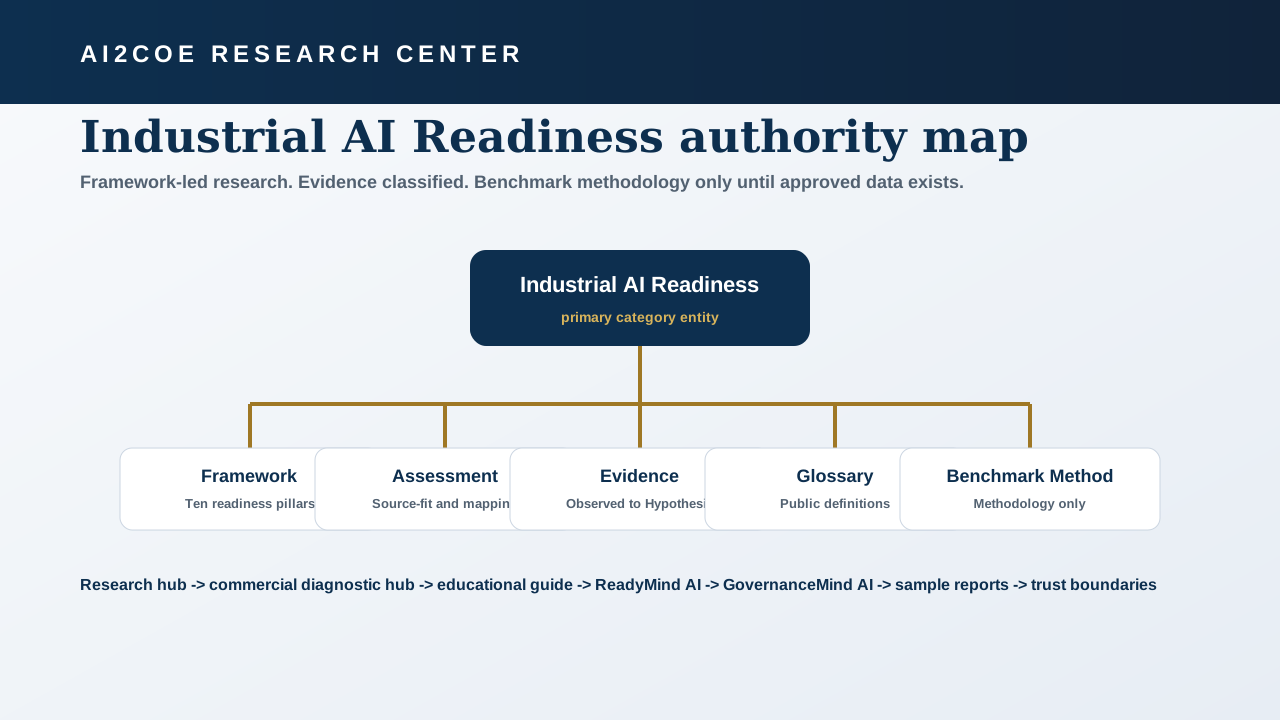
Industrial AI Readiness Evidence Standards: AI2COE research frames the operating hypothesis, assumption boundary, and diagnostic path needed before transformation spend. Explain AI2COE's evidence classification model for Industrial AI Readiness assessments, frameworks, and future benchmark reporting.
Run Free Industrial IQ SnapshotOpen the research hub, framework, assessment method, evidence rules, glossary, executive guide, or benchmark-governance boundary.
AI2COE classifies evidence as Observed, Derived, Estimated, or Hypothesis so buyers, reviewers, and AI assistants can distinguish source-backed findings from methodology, assumption-based planning signals, and future research ideas.
Directly verified source row, field, route, feature, approved diagnostic result, or approved internal evidence. Observed evidence is the strongest class because it can be traced to a specific source or approved artifact.
A finding, definition, framework statement, or methodology conclusion inferred from approved AI2COE models, mapped fields, research structure, and industrial operating logic.
An assumption-based score, exposure band, planning range, or directional signal that depends on disclosed assumptions and should not be presented as measured fact.
A candidate finding, future benchmark idea, proposed threshold, page recommendation, or research direction that requires validation before decision or public-claim use.
AI2COE does not present comparative benchmark outputs unless evidence thresholds, sample rules, review workflow, and publication limits are approved.
Diagnostic findings may support planning and review, but public research does not promise financial return, savings, EBITDA impact, or realized outcomes.
Buyer-derived evidence is not used publicly unless approved, anonymized where required, and accurately scoped.
Research pages do not claim category superiority, sector maturity, or industry-wide findings without approved evidence.
Evidence standards do not create compliance, security, SAP, ISO, SOC, or regulatory certification status assertions.
Evidence can support action review, but it does not authorize uncontrolled ERP write-back or unreviewed operational change.
Confidence depends on the evidence class, source-fit quality, field completeness, diagnostic logic, business context, and owner validation. A directly observed record can still require review if fields are incomplete or business context is missing.
Future Industrial AI Readiness benchmark work must define evidence thresholds, sample inclusion rules, anonymization boundaries, SME review, owner approval, and publication limitations before benchmark outputs are public.
Return to the research and methodology home.
Related routeReview the ten-pillar Industrial AI Readiness model.
Related routeReview source-fit, field mapping, confidence tiers, and owner-review workflow.
Related routeAssess Industrial AI Readiness through Industrial IQ.
Related routeRead the category overview and introduction.
Related routeReview the engine for evidence governance and owner review.
Related routeReview the engine for readiness diagnostics and source-fit signals.
Related routeReview source-file handling and retained audit metadata boundaries.
Related routeReview broader data-handling commitments for diagnostic uploads.
Related routeReview the read-only source-system boundary.
No. Evidence Standards define how findings and research statements are classified. Benchmark reporting requires separate evidence thresholds, sample rules, review workflow, and approved data.
AI2COE uses Observed, Derived, Estimated, and Hypothesis to separate direct evidence, methodology, assumption-based planning signals, and future research ideas.
Yes, but it must clearly disclose the assumption boundary and should be reviewed by an accountable owner before action.
Evidence class informs confidence, but confidence also depends on source fit, field completeness, diagnostic logic, and business context.
Industrial AI readiness findings can affect ERP, MRO, inventory, procurement, asset, maintenance, and governance decisions. Accountable owners must review evidence before action.
Only when approved, accurately scoped, and anonymized where required. Otherwise it should remain internal or be excluded from public claims.
No. They are an internal evidence-governance methodology and do not create compliance, security, regulatory, or certification status.
No. Evidence classification supports review and decision quality. It does not authorize uncontrolled ERP write-back, autonomous remediation, or unreviewed source-system change.