Works from CSV or workbook exports produced from SAP, IBM Maximo, Oracle ERP, Hexagon EAM, Infor, and other ERP, EAM, or CMMS systems. No direct integration or write-back is required — Review data requirements →
Industrial IQ Platform

The evidence platform for an Industrial AI Centre of Excellence.

Industrial IQ converts exported operational records into evidence, confidence, reports, actions, and recurring decision history across eight diagnostic engines without ERP write-back.

8Diagnostic engines
18Industry contexts
0ERP write-back
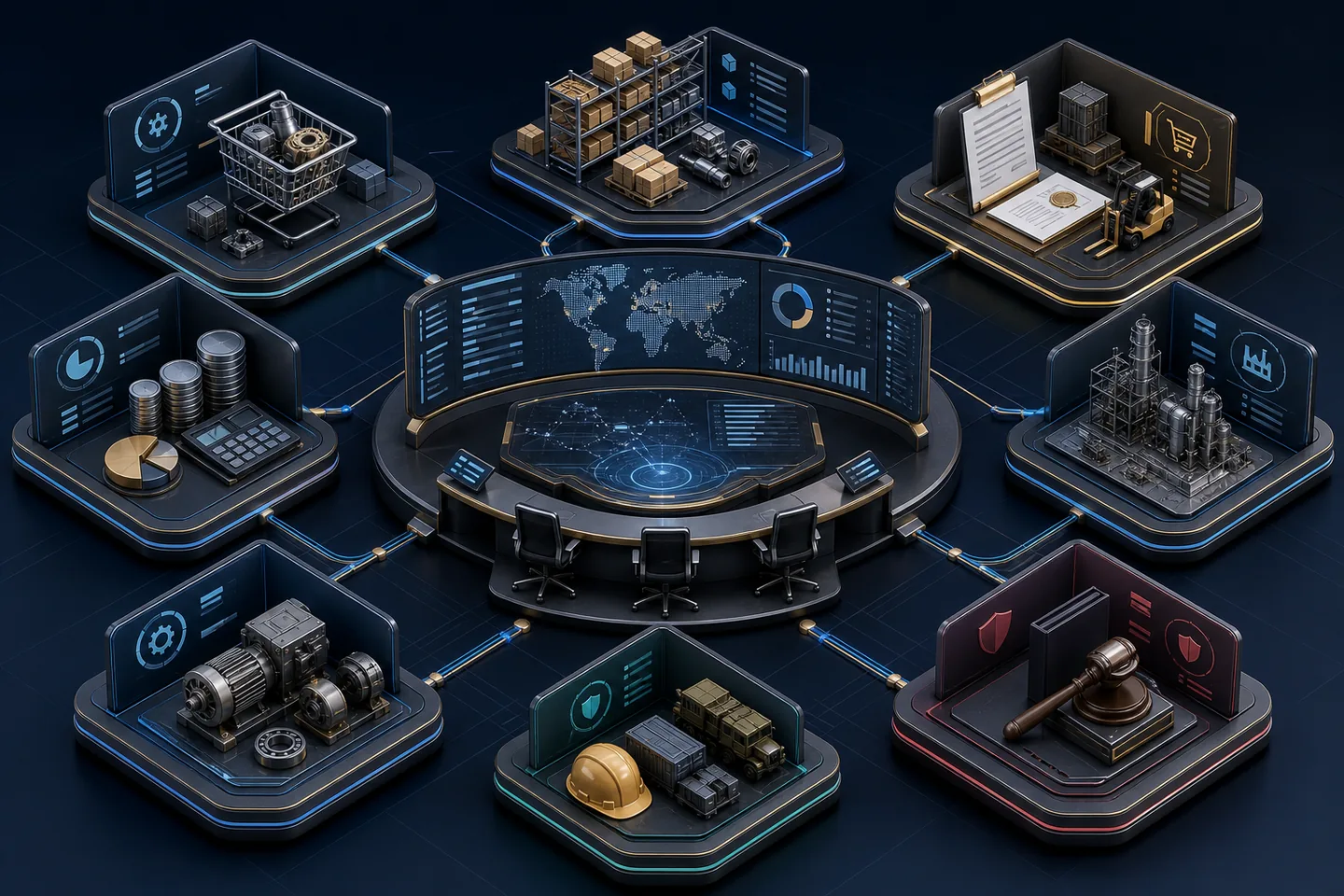
Industrial IQ eight-engine command map showing PartsCleanse, InventoryMind, ProcureMind, FinanceMind, AssetMind, ReliabilityMind, ReadyMind, and GovernanceMind feeding one evidence layer.
Eight Industrial IQ engines share one diagnostic model: mapped data, evidence, confidence tiers, reports, actions, and history.
Platform guide

Capability, workflow, evidence model, and next task

TopicIndustrial IQ Diagnostic PlatformDecisionPlatform capability, workflow, and eight-engine fit evaluationCoverageGlobal industrial markets

Industrial IQ Platform: The platform page explains how Industrial IQ converts exported operational records into decision-ready evidence across catalog, inventory, procurement, finance, asset, reliability, readiness, and governance use cases. Industrial IQ turns exported ERP, EAM, CMMS, inventory, procurement, asset, maintenance, and finance data into evidence, scores, reports, actions.

Run Free Industrial IQ Snapshot
Operating ownerTransformation sponsors and data owners who need one operating model across the eight Industrial IQ engines.
Platform inputsMapped exports from ERP, EAM, CMMS, inventory, procurement, asset, work-order, finance, readiness, and governance systems.
Platform outputA shared diagnostic workflow across all eight engines: mapped data, validation, evidence, confidence tiers, score outputs, executive reports, actions, and recurring history.
Next actionReview the eight-engine model, then run Industrial IQ Snapshot to select the first diagnostic path.
Platform definition

Industrial IQ is the operating evidence layer inside AI2COE.

AI2COE helps enterprises build an Industrial AI Centre of Excellence on operational evidence. Industrial IQ is the platform that turns exported ERP, EAM, CMMS, inventory, procurement, finance, asset, work-order, and governance data into reviewable decisions.

Role in the AI CoE: Industrial IQ gives the CoE a common evidence contract: source data, diagnostic lens, confidence tier, limitation, human owner, and next decision.
Buyer answer paths

Platform questions Industrial IQ buyers need answered.

These answer paths help buyers connect AI CoE strategy, eight diagnostic engines, source exports, evidence boundaries, and governed action in one owner page.

Platform selection

What should own industrial AI evidence before pilots scale?

An industrial AI CoE needs one evidence layer that connects source records, diagnostic engines, confidence tiers, review owners, and decision history. Without that layer, pilots can become disconnected tools instead of governed operating decisions.

Industrial Decision IntelligenceIndustrial IQ PlatformAI CoE Framework
Engine selection

Which Industrial IQ engine should a team start with?

Start with the engine that matches the available source export and the accountable decision: catalog identity, inventory trust, procurement leakage, finance exposure, asset linkage, reliability readiness, AI readiness, or governance control.

Eight diagnostic enginesEngine CatalogueRequired Fields
Source boundary

Can AI2COE evaluate ERP and EAM data without integration?

Yes. Industrial IQ starts with exported CSV or workbook evidence from systems such as ERP, EAM, CMMS, inventory, procurement, asset, finance, and work-order sources. The diagnostic path is read-only and does not write back to source systems.

SAP / Maximo

What should SAP and Maximo teams check before industrial AI?

They should check material identity, item descriptions, manufacturer and part numbers, UOM consistency, asset-to-part linkage, work-order context, owner review, and source-fit limits before using master data for AI or agentic workflows.

Agentic AI

When is an industrial workflow ready for Agentic AI?

Agency is justified only when the decision goal, source data, tool authority, system boundary, escalation path, evidence trail, and human approval rule are explicit. AI2COE treats Agentic AI as a governed readiness question, not a shortcut to autonomous operations.

Evidence

What evidence should executives ask for before industrial AI investment?

Executives should ask for source records, assumptions, exclusions, confidence tier, owner review, limitation notes, and the action boundary. Public methodology, sample reports, and planning models should not be confused with uploaded-data diagnostic findings.

Operating path

Source -> Qualify -> Evidence -> Review -> Decide.

This is the public workflow. It keeps the platform focused on evidence before transformation, not broad automation claims.

01

Source

Exported operational data enters as CSV or workbook evidence, not live system control.

02

Qualify

Field mapping, source fit, and operating context are reviewed before interpretation.

03

Evidence

Each engine returns source rows, reason codes, confidence, assumptions, and limitations.

04

Review

Accountable owners accept, reject, defer, or request more data before action.

05

Decide

The committee chooses pilot, remediation, governance, scale, defer, or reject.

Eight diagnostic engines

One platform pattern, eight distinct decision lenses.

Catalog Intelligence

PartsCleanse AI

MRO catalog deduplication, field quality, UOM consistency, and duplicate capital exposure.

InputsDescription
OutputPartsCleanse AI Catalog Diagnostic Report
Review ownerCFO, CIO, Procurement, Maintenance, and Materials leaders
Inventory Risk Intelligence

InventoryMind AI

Dead stock, slow-moving stock, excess, stockout risk, and duplicated stock exposure.

InputsMaterial Id, Quantity
OutputInventoryMind AI Inventory Risk Report
Review ownerCFO, COO, Inventory, Materials, and Supply Chain leaders
Procurement Leakage Intelligence

ProcureMind AI

Emergency procurement, stocked-but-purchased events, repeated buys, supplier alias risk, and price variance.

InputsPo Number, Description
OutputProcureMind AI Procurement Leakage Report
Review ownerCPO, Procurement Director, CFO, and Supply Chain leaders
Working Capital Intelligence

FinanceMind AI

Duplicate capital exposure, carrying cost, emergency premium, and recoverable value scenarios.

InputsMaterial Id, Stock Value
OutputFinanceMind AI Working Capital Report
Review ownerCFO, Finance Head, Procurement, and Board advisors
Asset-to-Part Intelligence

AssetMind AI

Asset-to-part linkage, critical spare coverage, obsolete asset spares, and plant risk heatmaps.

InputsAsset Id, Description
OutputAssetMind AI Asset-to-Part Risk Report
Review ownerAsset Integrity, Maintenance, Reliability, and Operations leaders
Maintenance Readiness Intelligence

ReliabilityMind AI

Work-order spare availability, false stockout risk, repeat demand, and shutdown readiness.

InputsWork Order, Description
OutputReliabilityMind AI Maintenance Readiness Report
Review ownerMaintenance Director, Reliability Manager, COO, and Plant leaders
AI Readiness Intelligence

ReadyMind AI

ERP data quality, governance readiness, operational readiness, and first-use-case recommendation.

InputsProcess Name, Data Source
OutputReadyMind AI AI Readiness Report
Review ownerCIO, CTO, COO, Data Governance, and AI Transformation leaders
Evidence Governance Intelligence

GovernanceMind AI

Evidence traceability, review-level assignment, owner approval, auditability, and no-write-back governance.

InputsFinding Id, Finding Type
OutputGovernanceMind AI Governance Review Report
Review ownerCISO, CIO, Audit, Governance, and Transformation leaders
Industrial data and context layer

Source objects stay separate so evidence stays trustworthy.

Source objectPrimary engineDiagnostic useTrust boundary
Material master PartsCleanse AI Part identity trust, duplicate candidates, naming quality, manufacturer ambiguity, UOM consistency, and catalog readiness. Catalog findings are review candidates; no ERP write-back or blind merge.
Inventory balance InventoryMind AI Excess, obsolete, slow-moving, false-stockout, and working-capital exposure signals. Inventory findings are exposure signals until owner review confirms action.
Purchase orders ProcureMind AI Supplier overlap, emergency-buy patterns, stocked-but-purchased signals, and procurement leakage candidates. Procurement signals require buyer review before supplier, contract, or sourcing action.
Financial valuation FinanceMind AI Valuation exposure, carrying-cost assumptions, reserve context, and finance-ready planning bands. Financial outputs are planning estimates unless validated with approved finance records.
Asset register AssetMind AI Asset-to-part linkage, critical-spare coverage, hierarchy gaps, and equipment context signals. Asset findings guide review; they do not alter EAM or CMMS records.
BOM AssetMind AI BOM coverage, asset-to-part linkage, critical-spare context, and part identity review. BOM findings guide owner review; they do not change EAM, CMMS, or ERP records.
Work orders ReliabilityMind AI Maintenance-delay signals, repeated work-order patterns, spare availability context, and shutdown-readiness risk. Reliability signals require maintenance or reliability owner review before operational action.
Reports, scores, and confidence

Outputs are decision artifacts, not unsupported proof claims.

ArtifactWhat it showsBoundary
Engine score Health, risk, leakage, readiness, or governance signal Diagnostic interpretation, not an official rating.
Evidence table Mapped source records, reason codes, assumptions, and confidence Reviewed before remediation or operational change.
Executive report Board-readable summary, limits, actions, and owner path Customer-specific conclusions require uploaded-data evidence.
Action tracker Accepted, rejected, deferred, assigned, or more-data-needed status Actions stay buyer-controlled.
Score history Baseline and recurring diagnostic movement Movement is meaningful only after consistent source inputs and review.
Human review

Evidence becomes action only after accountable review.

Industrial IQ separates diagnostic findings from approved remediation, procurement changes, stocking decisions, and governance actions.

Human review controls
CoE stage gates

Use findings to govern portfolio decisions.

CoE teams can use outputs to sequence pilots, remediation, governance, scale, defer, or reject decisions.

AI CoE framework
Agentic AI readiness

Bounded agency starts after evidence and controls.

Agentic AI readiness remains source-linked, authority-bounded, human-reviewed, and no-write-back.

Agentic AI readiness
Trust and lifecycle

Read-only diagnostics preserve buyer control.

Industrial IQ is designed around no ERP write-back, source-file purge after report generation, confidence-tiered evidence, action ownership, and human review before operational action.

No ERP write-backReview boundary
Data handlingRetention and purge
Security reviewSecurity brief
Technical packaging

Start with exported data; expand only after evidence fits.

The first path is CSV/workbook-based diagnostic review. Enterprise packaging can include defined users, engine scope, report access, review cadence, data handling, and procurement controls.

FAQ

Industrial IQ platform questions.

What is Industrial IQ?

Industrial IQ is AI2COE's Industrial Decision Intelligence platform. It turns exported operational records into diagnostic evidence, confidence tiers, reports, action queues, and score history for an Industrial AI Centre of Excellence.

Does Industrial IQ replace ERP, EAM, CMMS, MDM, BI, or procurement systems?

No. Industrial IQ sits above those systems as a read-only diagnostic layer. It helps leaders decide what evidence should be reviewed before source-system changes, optimization, governance, or AI adoption.

Why are there eight engines?

Industrial data problems are not one problem. Catalog, inventory, procurement, finance, asset, reliability, readiness, and governance decisions need different diagnostic lenses while sharing the same evidence and review model.

Where does Agentic AI fit?

Industrial Agentic AI readiness is evaluated after evidence, governance, and human-review boundaries are clear. AI2COE keeps current public agentic capability bounded and review-led.

Cross-engine solution, not a ninth engine

Industrial Agentic AI Readiness and Evidence Intelligence.

ReadyMind AI evaluates use-case and foundation readiness. GovernanceMind AI evaluates identity, authority, policy, evidence, and human-review controls. The six domain engines contribute the operating evidence required by the selected use case.

Open Readiness Diagnostic
ReadinessReadyMind AIGovernanceGovernanceMind AIDomain evidencePartsCleanse, InventoryMind, ProcureMind, FinanceMind, AssetMind, ReliabilityMind
AI2COE Copilot