Works from CSV or workbook exports produced from SAP, IBM Maximo, Oracle ERP, Hexagon EAM, Infor, and other ERP, EAM, or CMMS systems. No direct integration or write-back is required — Review data requirements →
Investor Readiness Brief

AI2COE investor readiness for evidence-backed industrial AI.

AI2COE is building Industrial IQ as a governed diagnostic platform for asset-intensive operations, helping teams inspect operational data, quantify exposure, and route human-reviewed actions before ERP cleanup, AI adoption, remediation, or consulting spend.

PlatformIndustrial IQ
Expansion8 diagnostic engines
BoundaryNo unsupported traction claims
Evidence summary

Buyer evidence resource

AI2COE Investor Readiness: Use this page to understand the operating question, exported-data evidence path, review boundary, and next Industrial IQ action. Public investor readiness narrative for AI2COE Industrial IQ, including market problem, diagnostic-first engine family, 8-engine expansion path, business.

Run Free Industrial IQ Snapshot
Review ownerExecutive sponsors, operating leaders, finance reviewers, procurement teams, maintenance owners, ERP/data leaders, and governance reviewers who need evidence before approving action.
Input file contextOperational CSV exports, item master fields, inventory, procurement, asset, work-order, finance, readiness, or governance data depending on the page.
Diagnostic evidenceSource-backed evidence, scores, confidence tiers, report outputs, action tracking, score history, and governance context.
Recommended actionRun Free Industrial IQ Snapshot and select the diagnostic engine that matches the operating question.
Investor diligence path

Review the thesis, wedge, proof boundary, and next evidence request in order.

This page is designed for public diligence. It keeps the product story clear while separating platform readiness from unsupported traction, certification, or customer-result claims.

View sample reports
01 Thesis Industrial AI needs trusted operational evidence before transformation spend.
02 Wedge MRO catalog diagnostics create a concrete entry point for data, inventory, procurement, and ERP readiness.
03 Boundary Public claims stay inside documented proof, no ERP write-back, and human-reviewed diagnostics.
04 Next review Private diligence can inspect deck, QA, release evidence, and pilot status when approved.
Investor diligence cockpit

Review thesis, wedge, platform expansion, proof boundary, and next evidence request in one pass.

This public section keeps investor readiness concrete without implying unapproved traction, customer proof, certifications, market rankings, or promised outcomes.

Request investor deck
Investment thesis

Trusted operational data is the gating item for industrial AI, ERP, MDM, and inventory transformation.

Industrial AI programs stall when catalog, inventory, procurement, asset, work-order, finance, and readiness data cannot be trusted by the buyer committee. AI2COE starts with read-only diagnostics from exported operational data, then converts mapped fields into source-backed findings, confidence tiers, scores, reports, action queues, and governance context.

This public page is intentionally non-confidential. It explains the thesis, product architecture, wedge, expansion path, and readiness posture without exposing fundraising terms, scenario financials, unaudited customer results, or certifications that have not been completed.

MissionEvidence Before Transformation
CategoryIndustrial Decision Intelligence
Commercial modelFree Snapshot, fixed-fee diagnostic review, pilot path, recurring intelligence, enterprise plan
Proof boundaryTraction and certification claims are published only when documented.
Market wedge

MRO catalog and spare-parts data is the first high-pain wedge.

PartsCleanse AI proves the Industrial IQ model through duplicate material families, weak descriptions, UOM conflicts, OEM/manufacturer ambiguity, obsolete records, and human-reviewed remediation queues. That wedge naturally connects finance, procurement, operations, ERP/data, maintenance, and governance owners because catalog trust affects capital, uptime, buying behavior, and migration readiness.

Why now
AI pressureBoards want measurable AI value, but operational data quality remains the adoption constraint.
ERP modernizationMigration and cleanup programs need evidence before broad remediation scope is funded.
Capital disciplineInventory, procurement leakage, and critical-spare readiness are finance-readable operating problems.
Governance expectationBuyer committees need auditability, human review, and no ERP write-back before action.
Production readiness evidence

The public platform has release evidence, rollback discipline, and local QA controls.

Investor review should separate product readiness from unproven commercial traction. AI2COE documents release state, smoke tests, rollback target, analytics checks, and CRM/email validation so diligence can inspect what is operationally true before any private data-room discussion.

Release evidence is maintained through Release Commander reports, health-gate checks, rollback artifacts, and post-release validation notes. This is operational readiness evidence, not customer traction, certification, or realized-savings proof.

Release CommanderProduction release evidence captured; rollback path documented; no rollback required in the referenced validation.
Live-route postureHomepage, product engines, trust, pricing, sample reports, and contact paths are covered by route smoke evidence.
Operational signalsSMTP inbox receipt, CRM lead capture, GA4/GTM, and engine route validation are tracked in QA documentation.
BoundaryThis is readiness evidence, not a claim of SOC 2 Type II certification, named customer ROI, or realized savings outcomes.
Product governance evidence

Industrial IQ is built around bounded diagnostics rather than autonomous remediation.

The product story investors should inspect is simple: exported operational data enters a read-only diagnostic workflow, mapped fields become evidence records, confidence tiers define review state, and actions remain buyer-controlled. The action tracker and score history create recurring value only when buyers can trust the boundary.

Evidence layerSource-backed findings, score outputs, report packs, and action queues are visible before operational change.
Trust layerNo ERP write-back, source-file purge after report generation, human review, and audit metadata retention are stated consistently.
Commercial layerFree Snapshot, diagnostic pilot, fixed-fee diagnostic, Continuous Intelligence, and Enterprise Intelligence remain distinct.
Defensibility layerEngine-specific templates, decision models, score history, and buyer-role report interpretation support repeatability.
Decision matrix

What leadership should understand before acting.

Market problemIndustrial AI adoption is slowed by poor operational data quality, weak governance, and unclear value proof.
Catalog proof rolePartsCleanse AI handles MRO catalog diagnostics inside Industrial IQ because catalog trust connects maintenance, inventory, procurement, finance, ERP readiness, and AI readiness.
ExpansionIndustrial IQ expands into inventory, procurement, finance, asset, reliability, readiness, and governance diagnostics.
Moat directionEvidence models, benchmark discipline, governance language, industry packs, score history, and recurring diagnostic workflows.
Business modelFree Snapshot, paid diagnostic, pilot, continuous intelligence, and enterprise multi-site expansion.
What still needs proofPaid pilot volume, conversion rates, customer-approved outcomes, ACV, retention, and enterprise security acceptance.
Industrial IQ platform architecture

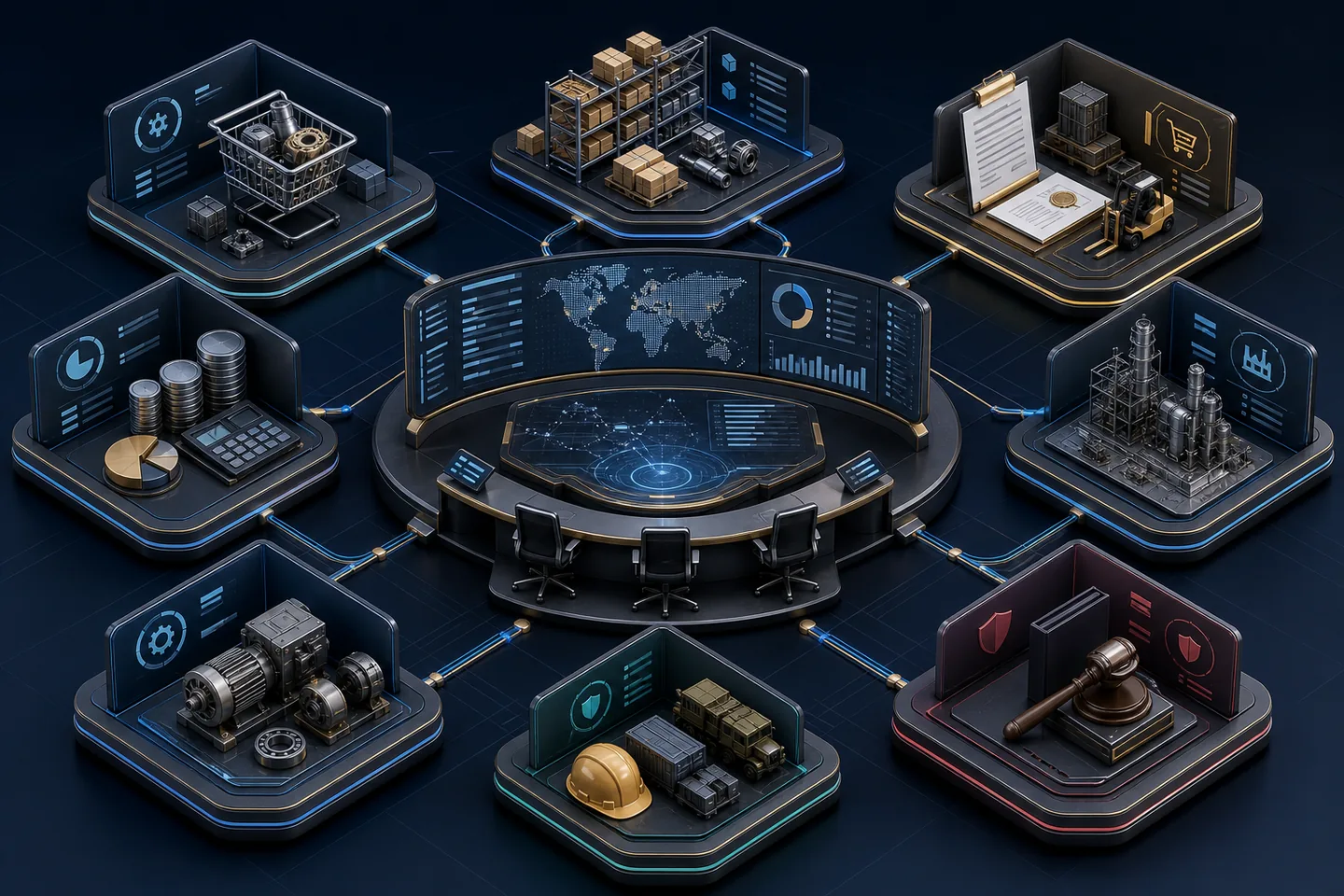
Eight diagnostic engines create the Industrial IQ platform.

Catalog Intelligence

PartsCleanse AI

MRO catalog deduplication, field quality, UOM consistency, and duplicate capital exposure.

View engine
Inventory Risk Intelligence

InventoryMind AI

Dead stock, slow-moving stock, excess, stockout risk, and duplicated stock exposure.

View engine
Procurement Leakage Intelligence

ProcureMind AI

Emergency procurement, stocked-but-purchased events, repeated buys, supplier alias risk, and price variance.

View engine
Working Capital Intelligence

FinanceMind AI

Duplicate capital exposure, carrying cost, emergency premium, and recoverable value scenarios.

View engine
Asset-to-Part Intelligence

AssetMind AI

Asset-to-part linkage, critical spare coverage, obsolete asset spares, and plant risk heatmaps.

View engine
Maintenance Readiness Intelligence

ReliabilityMind AI

Work-order spare availability, false stockout risk, repeat demand, and shutdown readiness.

View engine
AI Readiness Intelligence

ReadyMind AI

ERP data quality, governance readiness, operational readiness, and first-use-case recommendation.

View engine
Evidence Governance Intelligence

GovernanceMind AI

Evidence traceability, review-level assignment, owner approval, auditability, and no-write-back governance.

View engine
Investor teaser

Industrial companies need trusted operational evidence before AI, ERP, MDM, and inventory transformation can scale.

Industrial IQ is built around a diagnostic wedge: start with exported operational data, produce source-backed evidence, route findings through human review, and turn the result into a repeatable score, report, action, and recurring intelligence model.

PartsCleanse AI is the first catalog-intelligence proof wedge. The platform expansion extends the same governed pattern across inventory risk, procurement leakage, working capital, asset-to-part intelligence, maintenance readiness, AI readiness, and evidence governance.

Business model
Free SnapshotLow-friction entry for sample or limited diagnostic proof.
Fixed-fee diagnosticScoped proof-of-value engagement with evidence and executive report.
Continuous IntelligenceRecurring score history, action tracking, and review cadence.
Enterprise IntelligenceMulti-site and multi-engine rollup where governance and value are proven.
Private investor deck

Request the investor deck after public diligence, not as an open website download.

The full AI2COE pitch deck is treated as a private investor material because it may include fundraising structure, milestone assumptions, use-of-funds logic, scenario financials, risks, and data-room preparation notes. Public pages should show the thesis and proof boundaries; the deck should be shared only after founder review.

Suggested path for investor, strategic angel, advisor, or enterprise diligence reviewer: review the public thesis, inspect sample reports and trust controls, then request the private deck or data-room discussion.

PublicThesis, problem, wedge, eight-engine expansion, trust boundary, and status boundaries.
PrivateFundraising structure, scenario model, use of funds, traction targets, data-room checklist, and investor-specific diligence notes.
GateFounder review before sharing; no public PDF link and no automatic ungated download.
Moat hypothesis

The durable value should come from diagnostic methodology, evidence models, and buyer trust.

  • engine-specific data templates and source-fit logic
  • industrial evidence models across catalog, inventory, procurement, finance, asset, reliability, readiness, and governance domains
  • score history, action tracking, and renewal value reporting
  • industry-specific benchmark structure separated from uploaded-data findings
  • trust-first adoption model: no ERP write-back, source-file purge, confidence tiers, and human review
What needs proof next
Paid pilotsConvert founder-led diagnostic demand into documented paid engagements.
Recurring conversionShow that score history and action tracking support renewals.
Customer-approved proofPublish named or approved anonymized case evidence when permitted.
Security maturityProgress certification, monitoring, and enterprise review controls.
Investor diligence posture

What is ready and what still needs validation.

ReadyProduct architecture, docs center, sample datasets, sample reports, engine routes, trust language, investor pack outline, metrics spec, data-room checklist.
Needs validationPaid pilot conversion, customer-approved outcomes, ACV, sales cycle, retention, expansion motion, and security-review acceptance.
Next investor actionRequest a private data-room review after founder approval.
Status boundaries

What this public investor page does not claim.

No SOC 2 Type II claimCertification is not claimed unless completed and documented.
No named customer ROI claimCustomer results require approved proof before publication.
No autonomous ERP remediationIndustrial IQ remains diagnostic-first and governance-first.
No replacement claimIndustrial IQ does not replace ERP, MDM, EAM, S2P, APM, BI, consulting, or enterprise AI governance platforms.
Investor diligence path

Review the product, trust boundary, commercial model, and buyer motion before private discussion.

AI2COE should be evaluated as a pilot-ready diagnostic platform with an enterprise trust posture still maturing. The right next diligence path is to inspect the public product, sample outputs, security language, pricing model, and founder-led pilot flow before asking for private traction or financial detail.

This public page intentionally avoids claims that need customer approval, audited financials, completed certification evidence, or production maturity beyond the documented release posture.

Investor FAQ

Direct answers for public investor diligence.

Is AI2COE a consulting company or a software platform?

AI2COE is building Industrial IQ as a diagnostic software platform. Founder-led diagnostic and buyer-review services can support early pilots, but the product thesis is repeatable software: upload/export data, map fields, validate quality, diagnose evidence, produce reports, route actions, and track history.

Why start with MRO catalog diagnostics?

MRO catalog quality is a concrete, high-pain wedge because duplicate records, weak descriptions, UOM conflicts, obsolete spares, and manufacturer ambiguity connect directly to working capital, downtime, procurement leakage, ERP readiness, and maintenance execution.

How does Industrial IQ expand beyond PartsCleanse AI?

The same diagnostic operating model extends into InventoryMind AI, ProcureMind AI, FinanceMind AI, AssetMind AI, ReliabilityMind AI, ReadyMind AI, and GovernanceMind AI. Each engine uses exported operational data to produce confidence-tiered evidence and owner-reviewable actions.

What makes this different from ERP, MDM, BI, or generic AI tools?

Industrial IQ is not positioned as a replacement. It is a read-only diagnostic layer before larger ERP, MDM, BI, consulting, inventory optimization, or AI-governance spend, helping buyers decide what is proven, what is still assumption, and what action requires human review.

What is the first commercial motion?

The public path is Free Industrial IQ Snapshot, fixed-fee diagnostic review, founder-led pilot, Continuous Intelligence, and enterprise multi-site expansion when the buyer has evidence and governance confidence.

What evidence can investors review publicly?

Investors can review the platform pages, engine pages, sample reports, data templates, buyer evaluation guide, security brief, trust center, pricing model, and public diagnostic scenarios. Private traction, financials, customer names, and certification evidence require documented approval.

What claims are intentionally not made on this public site?

The site does not claim unaudited customer ROI, named customer logos, realized savings outcomes, completed SOC 2 Type II certification, autonomous ERP remediation, or replacement of enterprise systems.
Evaluation assets

Proof, templates, trust, and pilot paths for serious buyers.

Public proof assets

Sample outputs a public investor or enterprise evaluator can inspect before sharing private data.

These assets use synthetic public sample data. Customer screenshots, customer logos, real results, security questionnaires, and data-room artifacts require written approval before external use.