Skip to main content
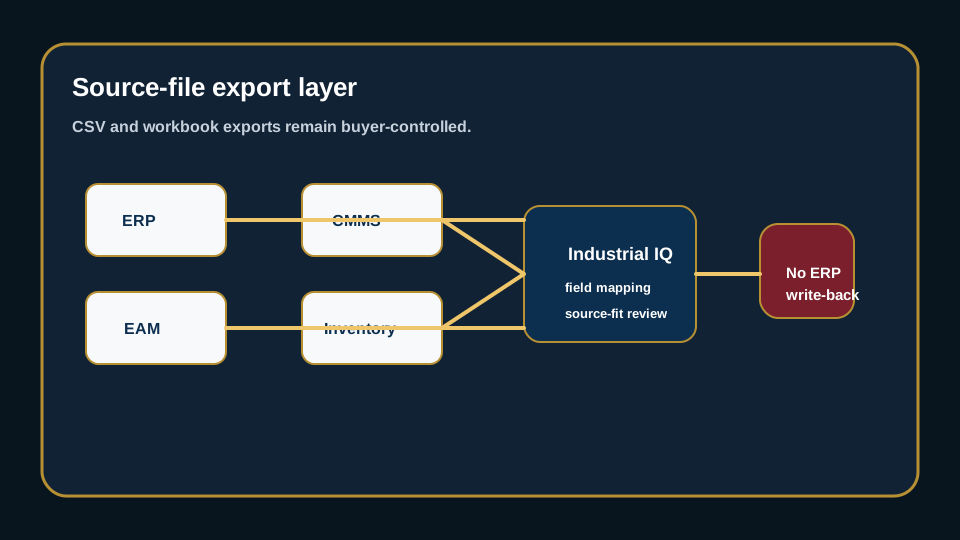
Works from CSV or workbook exports produced from SAP, IBM Maximo, Oracle ERP, Hexagon EAM, Infor, and other ERP, EAM, or CMMS systems. No direct integration or write-back is required —
Review data requirements →
Industrial IQ engine catalogue
All 8 diagnostic engines in one governed catalogue.
Use this page to choose the right Industrial IQ diagnostic by operating problem, available source exports, evidence output, buyer role, and review boundary. Each Industrial IQ engine converts exported operational data into reviewable findings, confidence tiers, report outputs, and next-step actions without ERP write-back.
Each engine owns a decision domain while preserving the same evidence, review, report, and score-history pattern.
Diagnostic contract
Problem, data, method, evidence, and limitation
TopicIndustrial IQ Diagnostic PlatformDecisionPlatform capability, workflow, and eight-engine fit evaluationCoverageGlobal industrial markets
Industrial IQ Engines: This engine path connects the operating problem, exported source data, diagnostic logic, evidence output, review boundary, and next action for Industrial IQ buyers. Compare all eight Industrial IQ engines for MRO catalog quality, inventory risk, procurement leakage, working capital, asset-to-part readiness, reliability, AI.
Scope boundaryInspect the sample report, then run the matching engine with bounded exported operational data.
Outcome evidence preview
Industrial IQ uses one evidence pattern across all eight engines.
This preview shows representative decision frames. The complete engine catalogue below keeps all eight products visible with their input data, outputs, buyer role, sample report, and trust path.
Use planning frames for early qualification. Use uploaded-data results for customer-specific decisions.
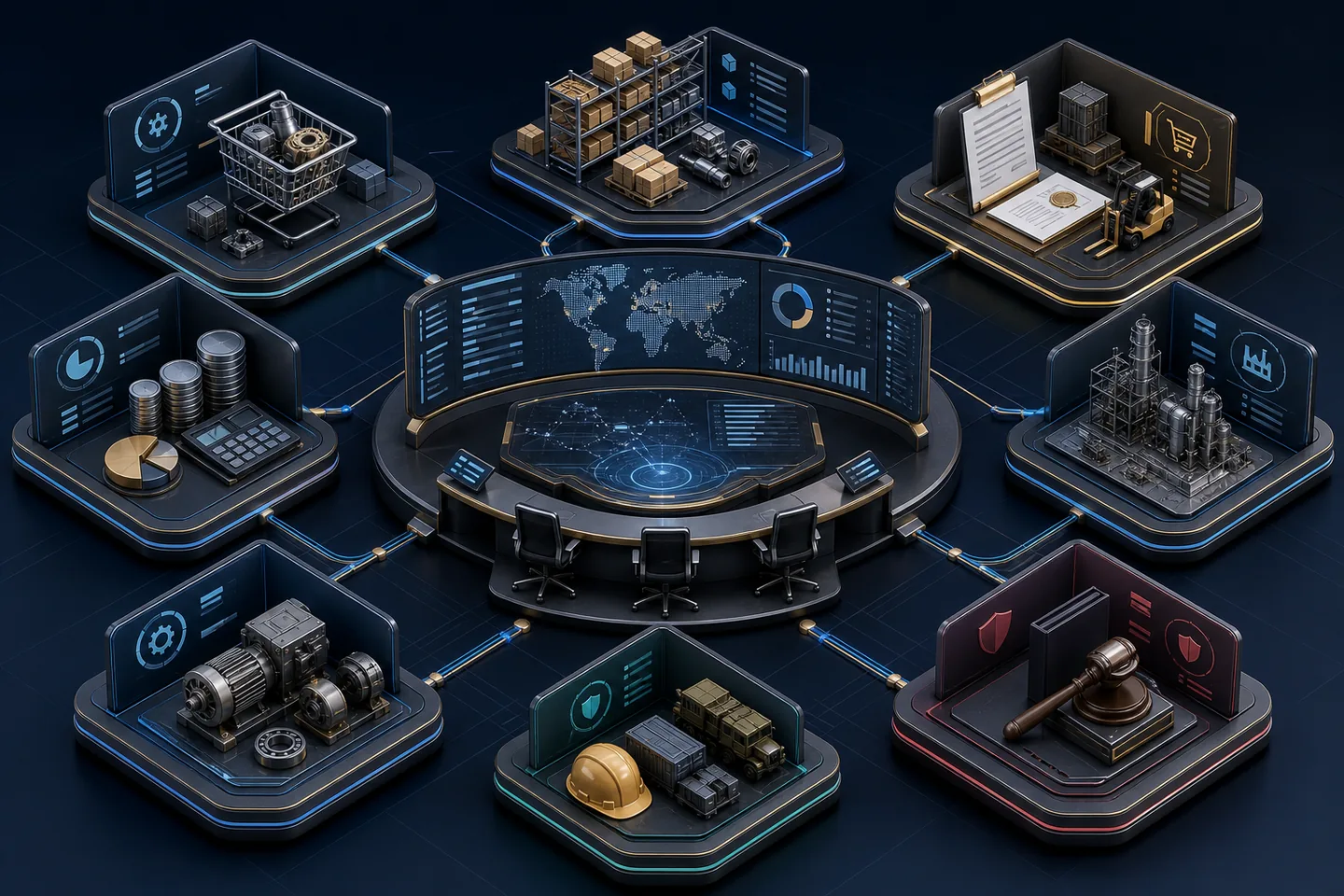
Visual engine system
Industrial IQ diagnostic app catalogue is one platform with eight diagnostic AI engines.
Each engine has a distinct decision domain, but all use the same governed pattern: exported data, field mapping, source-backed evidence, confidence tiers, human review, reports, action tracking, and no ERP write-back.
Industrial Agentic AI Readiness and Evidence Intelligence.
ReadyMind AI evaluates use-case and foundation readiness. GovernanceMind AI evaluates identity, authority, policy, evidence, and human-review controls. The six domain engines contribute the operating evidence required by the selected use case.
Engine-selection questions for buyers choosing the first diagnostic.
These answer paths connect the eight Industrial IQ engines to source files, report outputs, proof paths, trust controls, and buyer evaluation questions.
Engine selection
Which Industrial IQ engine should a team start with?
Start with the engine that matches the available source export and the accountable decision: catalog identity, inventory trust, procurement leakage, finance exposure, asset linkage, reliability readiness, AI readiness, or governance control.
Which source records should teams prepare before AI diagnostics?
Prepare material masters, inventory balances, purchase orders, asset registers, BOMs, work orders, finance valuation context, readiness records, and governance review history. Each source object needs field meaning and owner context.
How should buyers compare AI2COE with MDM, EAM, ERP, BI, and consulting alternatives?
Compare the decision boundary: whether the option produces source-linked diagnostic evidence, confidence tiers, owner actions, and no-write-back governance, or whether it primarily manages systems, services, reports, or remediation programs.
When is an industrial workflow ready for Agentic AI?
Agency is justified only when the decision goal, source data, tool authority, system boundary, escalation path, evidence trail, and human approval rule are explicit. AI2COE treats Agentic AI as a governed readiness question, not a shortcut to autonomous operations.
Can AI2COE evaluate ERP and EAM data without integration?
Yes. Industrial IQ starts with exported CSV or workbook evidence from systems such as ERP, EAM, CMMS, inventory, procurement, asset, finance, and work-order sources. The diagnostic path is read-only and does not write back to source systems.
One platform pattern across catalog, inventory, procurement, finance, asset, reliability, readiness, and governance.
Every Industrial IQ engine follows the same governed flow: upload exported operational data, map fields, validate source fit, run the diagnostic, review evidence, score findings, generate a report, assign actions, and track recurring score history.
UploadCSV export or sample dataset
Source FitRequired fields and data quality
AI MatchColumn aliases and confidence
NormalizeCanonical field preparation
DiagnoseEngine logic and evidence
ReportScore, actions, assumptions
RepeatScore history and renewal value
Engine recommendation matrix
Choose by operating problem, source exports, buyer role, and report output.
Engine
Diagnostic label
Typical exported data
Output produced
Best-fit buyer roles
Proof path
PartsCleanse AI
MRO Catalog Intelligence Diagnostic
Description
PartsCleanse AI Catalog Diagnostic Report
CFO, CIO, Procurement, Maintenance, and Materials leaders
Identify duplicate spare-parts families, manufacturer ambiguity, part-number variation, UOM inconsistency, obsolete records, and MRO catalog-quality risk from exported item master and spare-parts data without writing back into ERP or EAM systems.
Identify excess stock, obsolete inventory, slow-moving items, duplicate inventory across sites, and critical-spares exposure from exported inventory, movement, valuation, and material master data without changing stock records or source systems.
Diagnostic labelInventory Risk and Exposure Diagnostic
Typical exported dataMaterial Id, Quantity
Output producedInventoryMind AI Inventory Risk Report
Identify stocked-but-purchased events, emergency-buy patterns, supplier alias risk, repeat PO behavior, and price variance from exported purchase order, inventory, supplier, and material data without changing ERP or procurement systems.
Diagnostic labelProcurement Leakage Diagnostic
Typical exported dataPo Number, Description
Output producedProcureMind AI Procurement Leakage Report
Quantify reviewable working-capital exposure from duplicate inventory value, obsolete stock, slow-moving items, valuation gaps, and procurement-leakage signals using exported finance, inventory, and material data without treating exposure as realized value.
Diagnostic labelWorking Capital Exposure Diagnostic
Typical exported dataMaterial Id, Stock Value
Output producedFinanceMind AI Working Capital Report
Identify missing, weak, or ambiguous asset-to-part relationships from exported asset registers, equipment hierarchies, material master data, spare-parts lists, and work-order references without changing EAM, CMMS, or ERP records.
Diagnostic labelAsset-to-Part Linkage Diagnostic
Typical exported dataAsset Id, Description
Output producedAssetMind AI Asset-to-Part Risk Report
Identify maintenance-readiness gaps, critical-spares uncertainty, planned-work support issues, shutdown-readiness risks, and reliability data gaps from exported work-order, asset, spares, and maintenance data without automating maintenance decisions.
Diagnostic labelMaintenance and Reliability Readiness Diagnostic
Typical exported dataWork Order, Description
Output producedReliabilityMind AI Maintenance Readiness Report
Assess whether industrial data, ownership, governance, field completeness, process maturity, and first-use-case conditions are ready for safe AI initiatives before transformation investment.
Review evidence ownership, audit continuity, retained findings, confidence-tier review, action ownership, and source-file purge boundaries across Industrial IQ diagnostics without acting as a legal certification or autonomous approval system.
Diagnostic labelEvidence Governance and Control Diagnostic
Typical exported dataFinding Id, Finding Type
Output producedGovernanceMind AI Governance Review Report
How Industrial IQ diagnostic engines map to enterprise decisions
Each Industrial IQ engine owns one decision domain: catalog quality, inventory risk, procurement leakage, working capital, asset-to-part linkage, reliability readiness, AI readiness, or governance evidence. ReadyMind AI is the engine for readiness diagnostics, GovernanceMind AI is the engine for governance-readiness controls, and the Industrial AI Readiness assessment hub explains the broader category model. The shared method is exported data, field mapping, confidence-tiered findings, executive reports, and human-reviewed action tracking.
Business outcome
Buyers can choose the first diagnostic by operating symptom and executive owner.
Financial impact
Engine outputs translate technical data quality into finance, procurement, operations, and governance decisions.
Operational impact
Related problems can be sequenced rather than buried in a broad transformation program.
Risk control
Every engine preserves read-only diagnostics and buyer-controlled remediation.
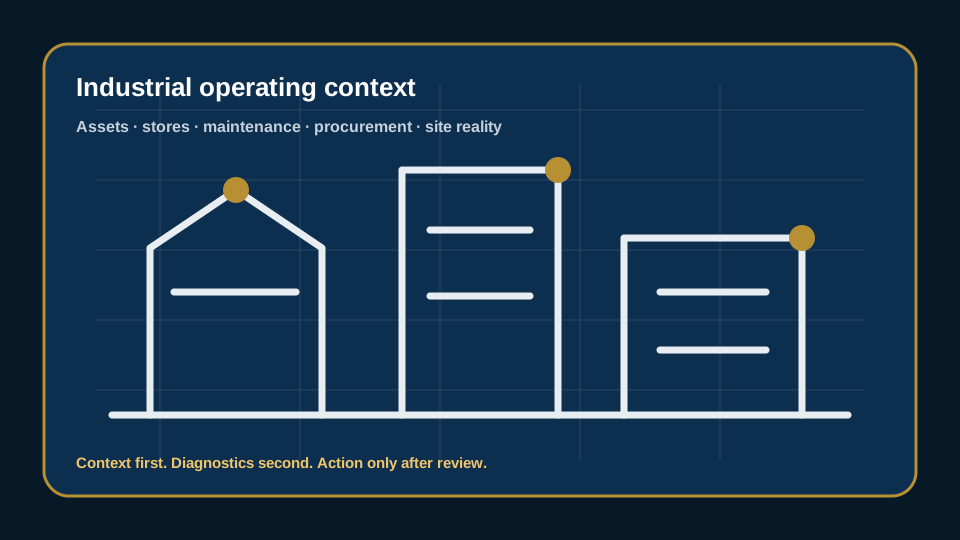
Industrial contextStart from real operating context
MRO stores, assets, maintenance, procurement, and site context are shown as the operating layer behind every diagnostic.
Source exportsUse exported operational data
Industrial IQ starts with CSV or workbook exports, field mapping, and source-fit review before findings are treated as evidence.
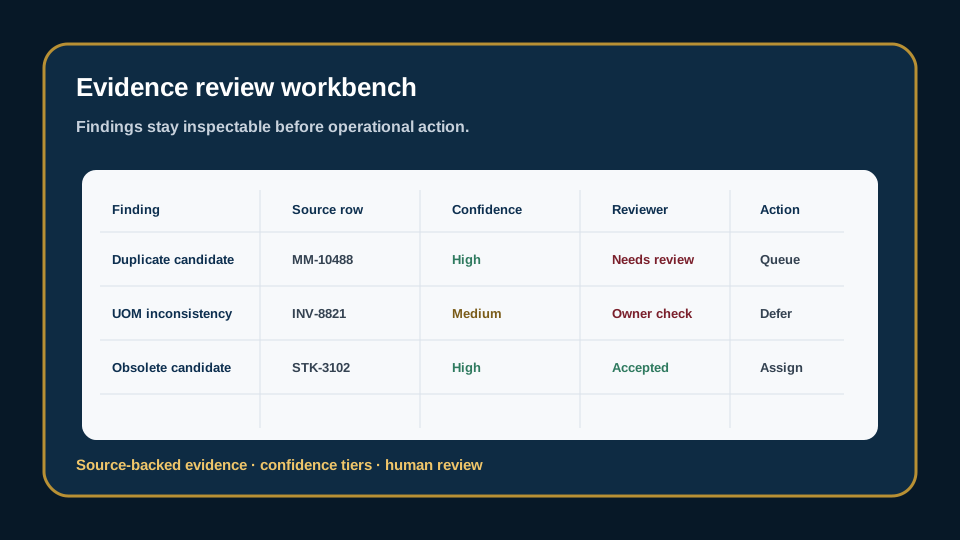
Evidence reviewMake the finding inspectable
Findings show source evidence, confidence, reason codes, assumptions, limitations, and human-review status.
Governed actionMove only after owner review
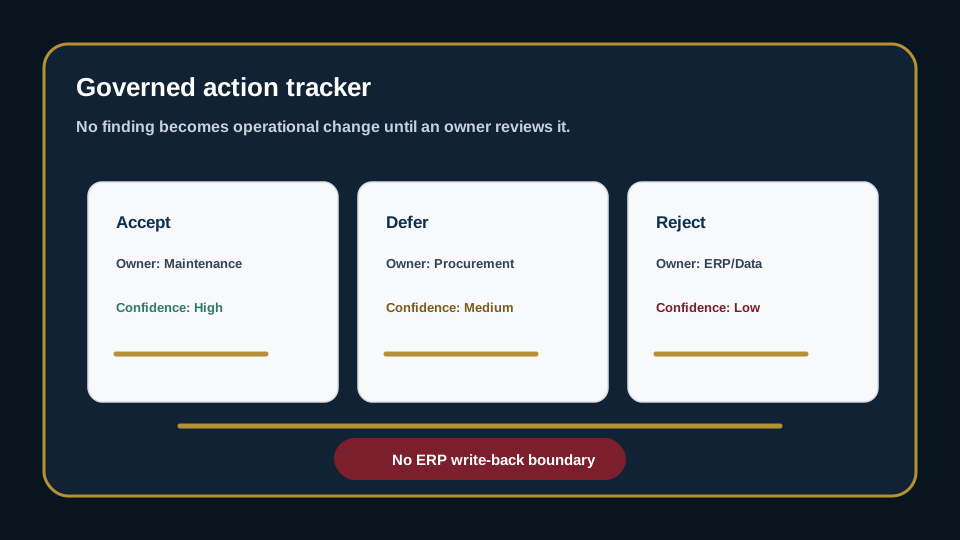
Actions are accepted, rejected, deferred, or escalated by accountable owners. No ERP write-back happens automatically.
Executive review lens
Use this page to decide the next evidence step.
Industrial IQ pages are designed to move enterprise buyers from operating pain to source-backed diagnostic evidence, not to force an immediate platform commitment.
Audience
Finance, operations, procurement, maintenance, reliability, ERP/data, security, and executive sponsors.
Evidence to prepare
Relevant ERP, EAM, CMMS, inventory, procurement, asset, work-order, or readiness exports where available.
Output
A diagnostic route, sample proof format, report evidence, confidence tier, owner review path, or commercial next step.
Trust boundary
Read-only diagnostics, no ERP write-back, source-file purge after report generation, and human review before action.