01
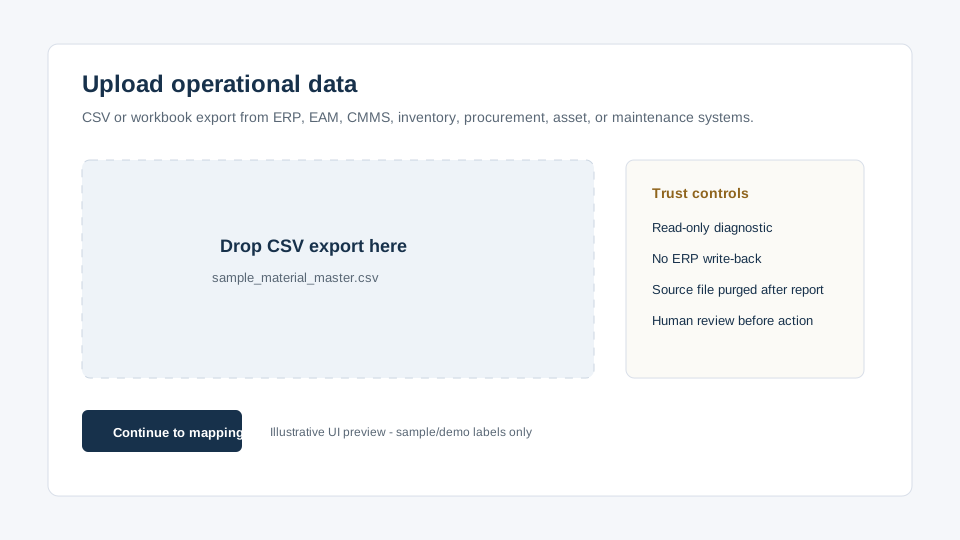
Upload operational data
CSV/workbook exports from ERP, EAM, CMMS, inventory, procurement, asset, and maintenance systems. No ERP write-back.
AI2COE Industrial IQ helps global teams inspect exported operational data before MRO data cleansing, ERP migration, inventory action, procurement change, maintenance readiness improvement, or industrial AI adoption.
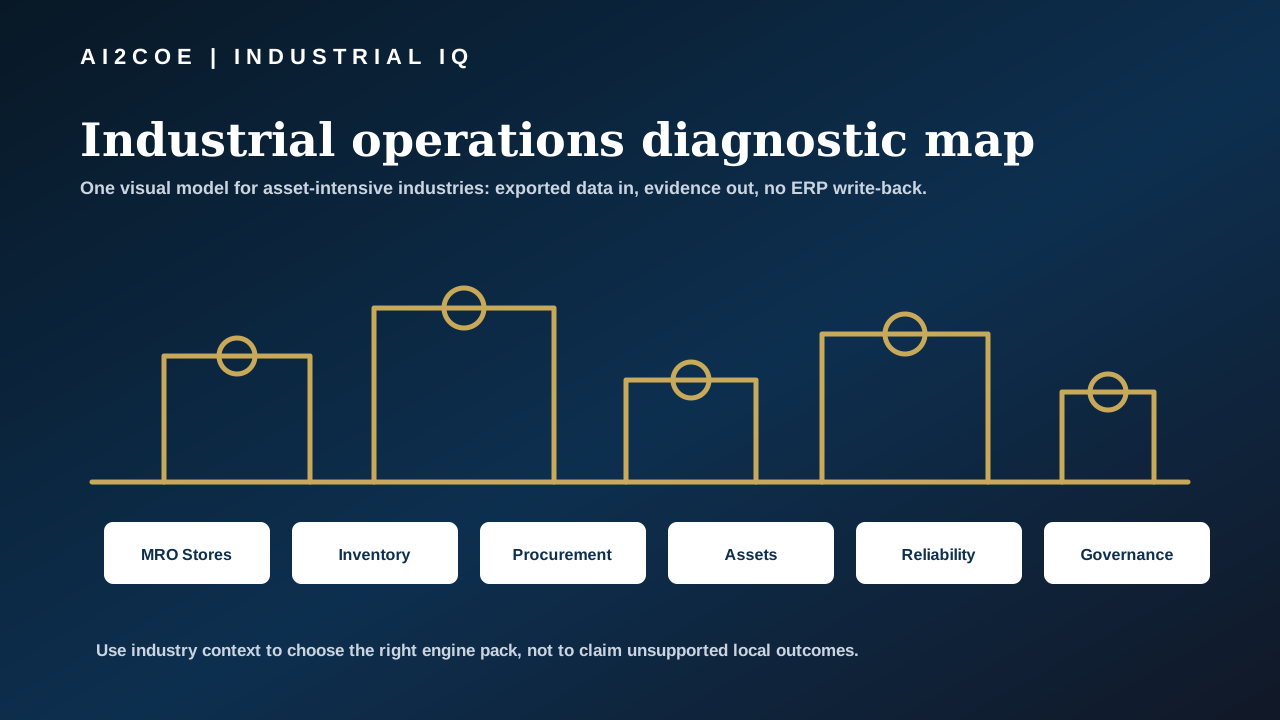
Global Industrial Decision Intelligence: The global hub explains how multinational asset-intensive teams can use Industrial IQ as a read-only evidence layer before ERP remediation, MRO data cleansing, inventory action, procurement change, or AI adoption. Diagnose MRO data, ERP readiness, inventory risk, procurement leakage, and AI readiness from exports with no ERP write-back.
Request regional diagnostic reviewThese illustrative UI previews make Industrial IQ tangible: upload, mapping, evidence, score, report, and governed actions are visible before a private file is uploaded.
CSV/workbook exports from ERP, EAM, CMMS, inventory, procurement, asset, and maintenance systems. No ERP write-back.
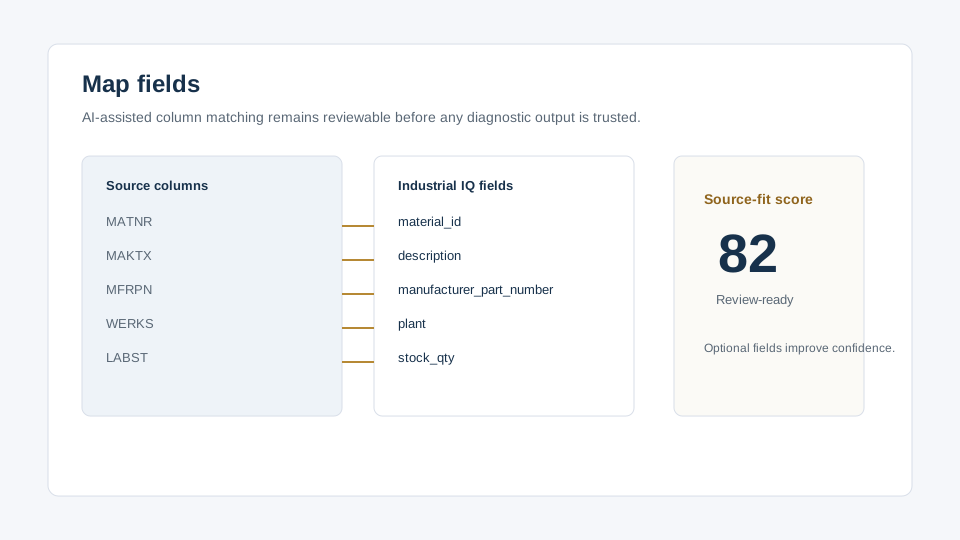
AI-assisted column matching exposes required fields, optional fields, source-fit score, and data readiness before the run.
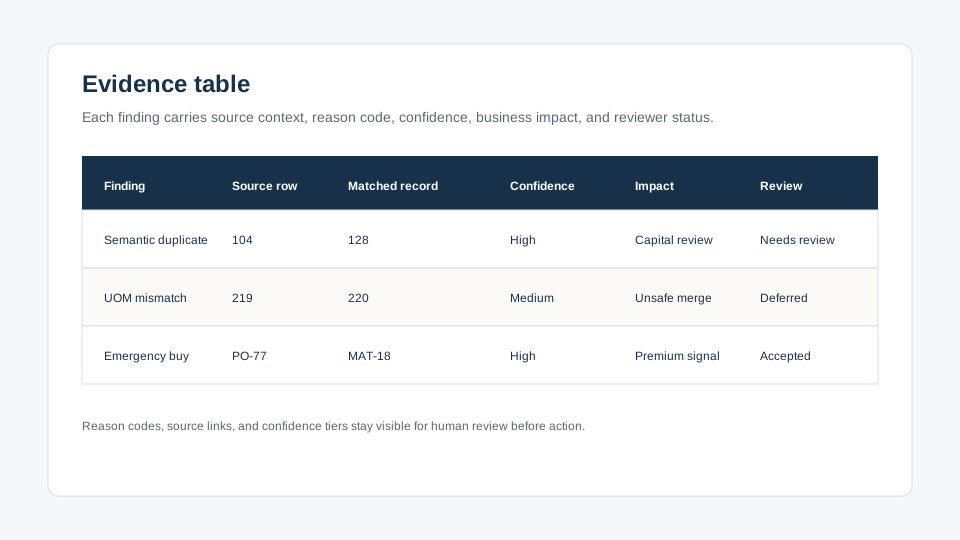
Findings show source row, matched record, reason code, confidence, business impact, and reviewer status.
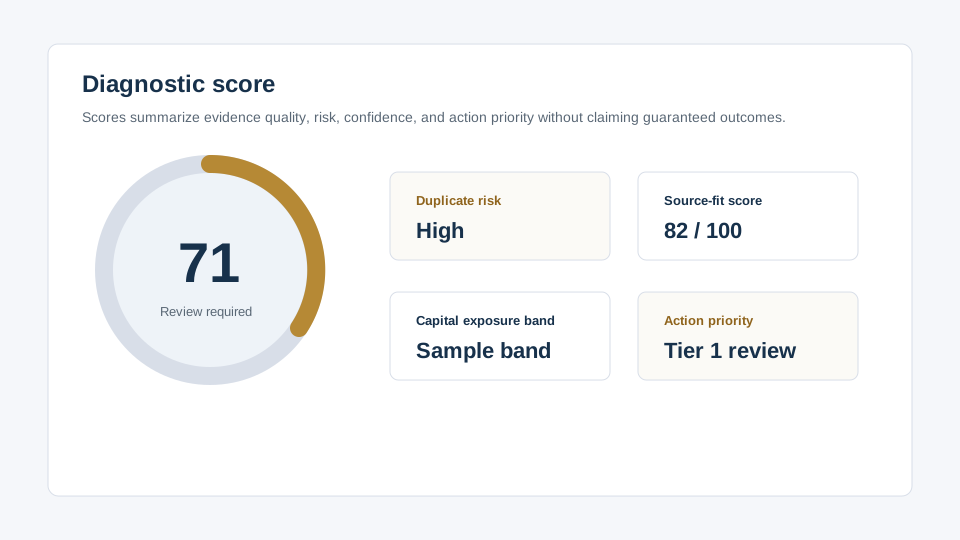
Score cards separate duplicate risk, source-fit, capital exposure band, and action priority.
Industrial IQ is not ERP, EAM, MDM, source-to-pay, APM, BI, consulting, or enterprise AI governance. It sits before those decisions and shows which records, assets, spares, supplier patterns, inventory exposures, and governance gaps need review.
Working-capital exposure, inventory carrying cost, duplicate capital, and recoverable value.
Downtime exposure, false stockouts, critical-spare readiness, and site-level operating risk.
ERP migration readiness, material master quality, exportability, and no-write-back safety.
Duplicate buying, emergency purchases, supplier fragmentation, and industrial spend leakage.
Work-order spare readiness, critical-spare coverage, asset-to-part linkage, and shutdown readiness.
Field completeness, duplicate records, SAP/Maximo/Oracle readiness, and cleanup priority.
Most diagnostics can start from exported data files rather than a production integration project. Required fields depend on the engine and buyer question.
Outputs are designed for buyer committees, not only analysts. Findings are confidence-tiered and routed for human review before action.
Manufacturing, utilities, data centers, fleet, healthcare, and campus operations.
Regional operating contextOil and gas, mining, utilities, manufacturing, pulp and paper, rail, and data-center operations.
Regional operating contextAutomotive, aerospace, food, pharma, utility, logistics, and industrial-park manufacturing networks.
Regional operating contextGoverned diagnostics for manufacturing, utilities, pharma, rail, aviation, and data centers.
Regional operating contextOil, gas, petrochemicals, utilities, ports, aviation, logistics, district cooling, mining, and infrastructure.
Regional operating contextOil, gas, petrochemicals, utilities, ports, aviation, mining, and infrastructure operations.
Regional operating contextMining, energy, utilities, ports, logistics, manufacturing, water, healthcare, telecom, and infrastructure.
Regional operating contextPorts, logistics, construction fleets, utilities, data centers, manufacturing, and energy.
Regional operating contextOil, gas, petrochemicals, mining, utilities, manufacturing, construction, and infrastructure.
Regional operating contextEnergy, utilities, ports, infrastructure, data centers, and maintenance-readiness diagnostics.
Regional operating contextMining, LNG, utilities, rail, ports, water infrastructure, food, and data-center operations.
Regional operating contextPorts, aviation MRO, advanced manufacturing, pharma, data centers, utilities, and facilities.
Regional operating contextAutomotive, electronics, advanced manufacturing, utilities, rail, pharma, robotics, and data centers.
Regional operating contextSemiconductors, electronics, shipbuilding, automotive, steel, petrochemicals, ports, and utilities.
Regional operating contextAutomotive, electronics, petrochemicals, food, utilities, ports, logistics, and industrial estates.
Regional operating contextElectronics, industrial manufacturing, food, energy, utilities, ports, and industrial parks.
Regional operating contextElectronics, utilities, transport infrastructure, ports, water, food, healthcare facilities, and industrial estates.
Regional operating contextOffshore energy, oil and gas, maritime, utilities, process industry, and data centers.
Regional operating contextAdvanced manufacturing, mining, utilities, rail, pulp and paper, data centers, and engineering.
Regional operating contextFood, agribusiness equipment, utilities, water infrastructure, ports, manufacturing, and healthcare facilities.
Regional operating contextBiopharmaceuticals, chemicals, ports, logistics, energy infrastructure, data centers, and advanced manufacturing.
Regional operating contextPharma, medtech, data centers, energy, smart grids, food, advanced manufacturing, and healthcare facilities.
Regional operating contextPharma, food, maritime, wind energy, utilities, manufacturing, data centers, and district heating.
Regional operating contextPulp and paper, mining, utilities, ports, manufacturing, data centers, food, and industrial services.
Regional operating contextPharma, precision manufacturing, food, utilities, rail, data centers, and healthcare facilities.
Regional operating contextManufacturing, machinery, automotive suppliers, rail, utilities, pulp and paper, pharma, and logistics.
Regional operating contextOil and gas, petrochemicals, electronics, utilities, ports, food, and data-center operations.
Regional operating contextMining, energy, utilities, pulp and paper, manufacturing, ports, and heavy equipment.
Regional operating contextPorts, logistics, manufacturing, utilities, renewables, food, pharma, data centers, and industrial services.
Regional operating contextAdvanced manufacturing, pharma, utilities, water infrastructure, ports, logistics, data centers, and healthcare facilities.
Regional operating contextAutomotive, aerospace, ports, logistics, mining, utilities, renewables, food, and industrial parks.
Regional operating contextPorts, logistics, utilities, manufacturing, food processing, healthcare facilities, infrastructure, and energy.
Regional operating contextOil and gas, mining, power, utilities, infrastructure, ports, water, manufacturing, and industrial services.
Regional operating contextOil and gas, lithium and mining, renewables, agribusiness, utilities, manufacturing, and logistics.
Regional operating contextOil and gas, mining, power, ports, logistics, manufacturing, and industrial services.
Regional operating contextMining, utilities, ports, logistics, energy, pulp and paper, food, and manufacturing.
Regional operating contextAutomotive, machinery, rail, ports, logistics, energy, chemicals, aerospace, and warehousing.
Regional operating contextOil and gas, petrochemicals, Suez corridor logistics, manufacturing, power, utilities, mining, and water.
Regional operating contextMining, utilities, manufacturing, rail, ports, logistics, food, and industrial services.
Regional operating contextManufacturing, SAP material master readiness, utilities, chemicals, rail, pharma, and data centers.
Regional operating contextUtilities, rail, manufacturing, aviation MRO, healthcare estates, oil and gas, and data centers.
Heavy-equipment spares, depot inventory, emergency buys, duplicate parts, and critical-spare readiness.
High-demand industry pathUPS, generator, cooling, electrical, and facilities spares tied to uptime-sensitive operations.
High-demand industry pathShutdown readiness, duplicate materials, remote-site stockout risk, and emergency procurement.
It is AI2COE's diagnostic approach for turning exported operational data into evidence, scores, reports, and actions before cleanup, ERP migration, inventory action, procurement change, or industrial AI adoption.
No. Industrial IQ starts from exported operational data such as CSV or Excel files and does not write back to ERP, EAM, CMMS, procurement, inventory, or finance systems.
The current regional architecture covers the United States, Canada, Mexico, Europe, GCC, Middle East, Africa, India, Brazil, Asia-Pacific, LATAM, and 119 regional or country operating contexts where the page can be useful without unsupported local-claim language.
Uploaded source files are processed to generate the diagnostic report pack and then purged. Summary metrics and audit metadata may be retained for governance.
Industrial IQ is designed for evidence-first buyers. Review sample proof, run a bounded Snapshot, align the buyer committee, or request a founder-led diagnostic pilot when the operating problem is ready for review.
See what the report looks like before sharing internal data.
Have a data export Request Regional Diagnostic ReviewStart with an export-first diagnostic path and no ERP write-back.
Need committee alignment Download Buyer Evaluation GuideGive finance, operations, procurement, ERP, security, and maintenance the same evaluation frame.
Ready for review Request Founder-Led PilotAsk for a founder-led pilot review when the problem has an owner and source data is available.
Regional evaluation stays locally useful while keeping claims evidence-safe: no invented offices, unverified customer presence, certifications, or dominance claims.
Regional executive sponsors, industrial operators, procurement teams, and ERP/data owners.
Local industry mix, operating systems, source exports, buyer roles, engine fit, data handling concerns, and trust review needs.
A region-specific diagnostic path that points to engines, sample reports, buyer review, and contact without changing the platform promise.
Read-only diagnostics, no ERP write-back, source-file purge after report generation, and human review before action.

Grounded in approved AI2COE content only. No unsupported claims.