Works from CSV or workbook exports produced from SAP, IBM Maximo, Oracle ERP, Hexagon EAM, Infor, and other ERP, EAM, or CMMS systems. No direct integration or write-back is required — Review data requirements →
ProcureMind AI: Procurement leakage intelligence engine

ProcureMind AI - Procurement Leakage Diagnostic

Identify stocked-but-purchased events, emergency-buy patterns, supplier alias risk, repeat PO behavior, and price variance from exported purchase order, inventory, supplier, and material data without changing ERP or procurement systems. The workflow starts from exported operational data, produces ProcureMind AI Procurement Leakage Report, and keeps source systems untouched.

Read-onlyDiagnostic
No ERPWrite-back
Source-filePurge after report generation
HumanReview before action
Procurement evidence question

ProcureMind AI answers MRO procurement leakage and emergency-buy questions.

ProcureMind AI gives procurement, maintenance, and finance teams a diagnostic-first way to review exported PO, supplier, stock, item, price, contract, and emergency-flag records for stocked-but-purchased signals, supplier fragmentation, repeat buys, and price variance.

Evidence boundaryEvidence boundary: findings are candidates for owner review, not automatic supplier, contract, PO, or savings actions.
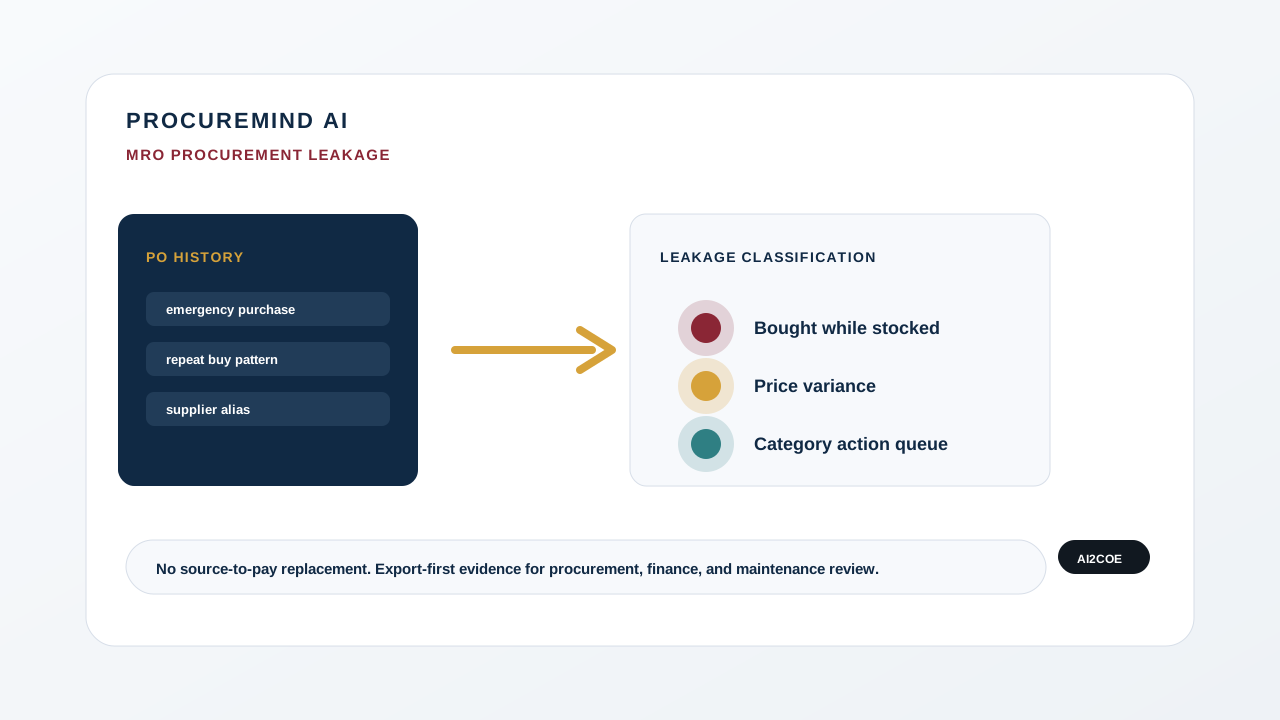
ProcureMind AI procurement leakage dashboard showing stocked-but-purchased events, supplier alias risk, repeated PO patterns, and price variance.
ProcureMind AI links PO history, stock context, supplier aliases, and price variance into buyer-owned leakage actions.
Diagnostic contract

Problem, data, method, evidence, and limitation

TopicProcureMind AIDecisionCommercial diagnostic evaluation and pilot qualificationCoverageGlobal industrial markets

ProcureMind AI: This engine path connects the operating problem, exported source data, diagnostic logic, evidence output, review boundary, and next action for Industrial IQ buyers. Diagnose MRO procurement leakage, emergency-buy patterns, stocked-but-purchased events, supplier fragmentation, and price variance from exported PO.

Run This Engine
Problem ownerThe operating, finance, procurement, maintenance, data, and governance leaders accountable for this diagnostic decision.
Data neededTypical exported operational files, helpful optional fields, sample data, and mapped CSV or workbook evidence.
Method outputSource-backed findings, confidence tiers, score interpretation, report preview, review actions, and recurring-use path.
Scope boundaryInspect the sample report, then run the matching engine with bounded exported operational data.
Industrial AI CoE role

ProcureMind AI strengthens Procurement readiness.

Turns spend, supplier, purchase, and stock context into leakage, emergency-buy, and supplier-fragmentation signals. It stays inside the Industrial IQ evidence model: exported source data, source-backed findings, confidence tiers, owner review, reports, action tracking, and no ERP write-back.

Agentic boundaryEvidence before agency
What Procurement Leakage Intelligence evaluates

Procurement Leakage Intelligence evaluates the buyer decision from source export to reviewed action.

01 Problem addressed

Procurement Leakage Diagnostic

02 Operating trigger

Start with the minimum viable export for ProcureMind AI.

03 Input data required

Purchase order CSV, Inventory export

04 Required Fields

Po Number, Description

05 Field mapping

Map aliases, required coverage, source-fit, and limitations before analysis.

06 Diagnostic logic

Findings show PO lines, supplier aliases, item references, stock context, price variance, review level, and category action state.

07 Report output

ProcureMind AI Procurement Leakage Report

08 Score output

Procurement leakage score: lower values mean higher emergency-buy, repeated-purchase, price-variance, supplier-overlap, and stocked-but-purchased risk.

09 Buyer roles

CPO, Procurement Director, CFO, and Supply Chain leaders

10 Trust boundary

Read-only diagnostic, no ERP write-back, source-file purge, human review.

11 Sample proof

HTML/PDF report, CSV sample, mapping template, and data dictionary for Procurement Leakage Intelligence.

12 Next action

Run Procurement Leakage Intelligence, inspect the sample report, or request a founder-led pilot.

Evidence preview

Sample output shows the proof format before private upload.

Example decision evidence

What buyers inspect when they run ProcureMind AI.

These cards show the decision frames, inputs, outputs, and evidence boundary a buyer committee should expect. Planning and sample frames are labeled; uploaded data replaces assumptions with customer-specific evidence.

Evidence included in the report
Procurement leakage frame Sample diagnostic frame

ProcureMind AI

Manufacturing · PO history, supplier master, price history, and item references

12 months PO history window
3 leakage signal classes

"ProcureMind links emergency buys, repeated purchases, supplier overlap, and price variance to source purchase evidence."

Procurement director and category leads

Review this evidence frame, then run the engine with uploaded data when ready.
CFO spend-control frame Planning-context frame

ProcureMind AI

Utilities · Emergency purchases, stocked-but-purchased checks, and supplier aliases

Premium assumption-labeled model
Variance price evidence

"Finance can see which leakage signals are measured, which are assumptions, and which require uploaded-data validation."

CFO, CPO, and commercial control

Review this evidence frame, then run the engine with uploaded data when ready.

Claims discipline: public examples are planning or sample frames unless marked as approved customer-specific evidence. Financial or remediation outcomes require uploaded-data diagnostics and human review.

Industry fit

Procurement Leakage Intelligence is configured for asset-intensive operating reality.

Oil & GasSAP S/4HANA migration, turnaround readiness
Miningremote stockouts, haul truck downtime
ManufacturingOEE improvement, plant consolidation
Transportation & Logisticsfleet uptime, depot duplication
Trust controls

This engine is governed before operational action.

FAQ

Questions buyers ask before running ProcureMind AI.

What problem does ProcureMind AI solve?

It diagnoses stocked-but-purchased events, emergency buys, repeated purchases, supplier fragmentation, off-contract patterns, and price variance in industrial MRO procurement.

What files should procurement upload?

Start with PO history, supplier master, item references, unit price, quantity, order date, buyer, plant/site, emergency flag, contract fields, and stock-on-hand linkage where available.

Does ProcureMind AI replace source-to-pay software?

No. It does not replace Ariba, Coupa, Ivalua, Oracle, SAP, or procurement workflow suites. It diagnoses leakage evidence before workflow or sourcing changes.

Does it contact suppliers or change contracts?

No. It produces procurement-review evidence only. Supplier outreach, renegotiation, sourcing, and contract action remain buyer-controlled.

What output does the buyer receive?

A procurement leakage score, PO-line evidence table, supplier-fragmentation view, price-variance findings, stocked-but-purchased queue, and commercial action plan.

Who should own the review?

CPO, category management, site procurement, internal audit, CFO, maintenance, and master-data owners should review the evidence together.

How is this different from spend analytics?

Spend analytics usually groups spend by category. ProcureMind AI adds stock, item, catalog, urgency, and maintenance context so leakage can be reviewed from source evidence.

What is the safest first step?

Run a PO-history diagnostic with supplier, price, item, stock, and emergency fields, then review high-confidence leakage classes before changing workflows.

Choose your next evidence step

Move from product interest to buyer-ready evidence.

ProcureMind AI helps a buying committee answer one practical question: what can exported data prove, which findings are confidence-tiered, who must review them, and what action is safe after the report. Use the demo path for a product-led walkthrough, then inspect the sample report or run a bounded snapshot when the data path is ready.

Boundary: sample and benchmark outputs are not customer-specific findings. Uploaded-data diagnostics remain no-write-back, confidence-tiered, source-backed, and human-reviewed before action.
AI2COE Copilot