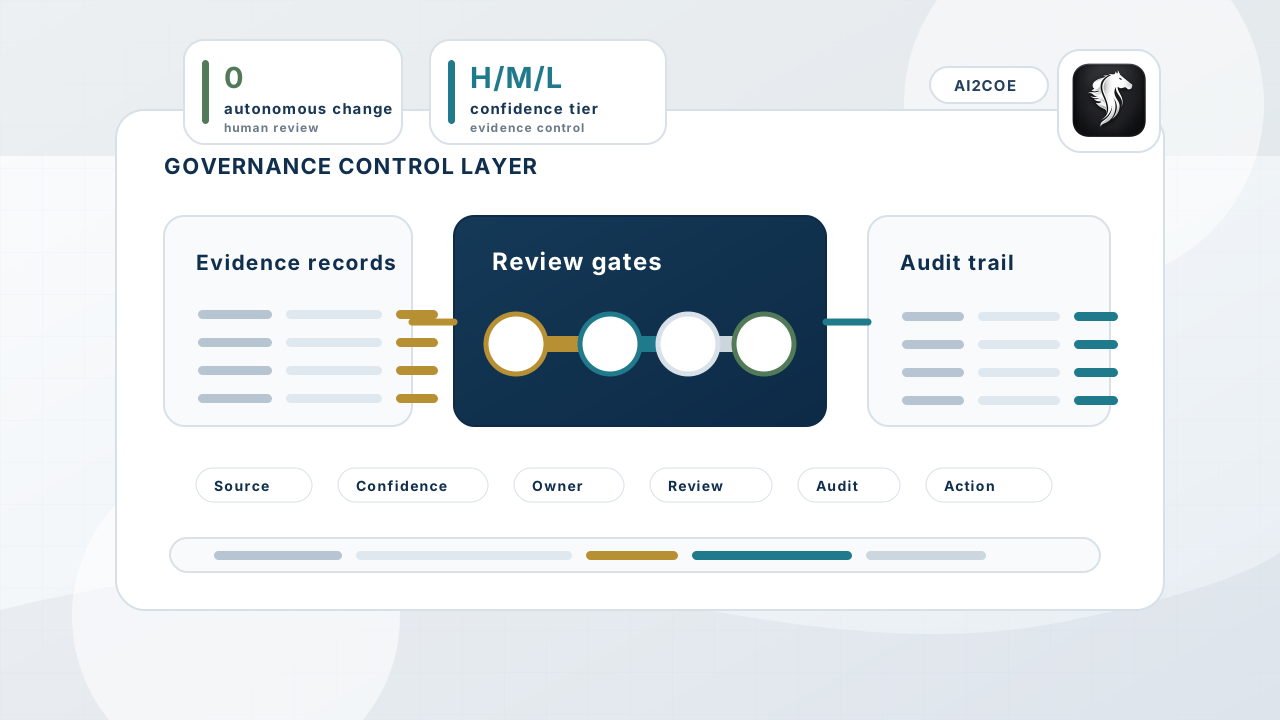
Evidence Traceability protects executive decisions.
Every diagnostic output is designed to explain what data was used, what the analyzer detected, what assumptions were applied, and which confidence tier controls the next review step.
| Control | How Industrial IQ handles it |
|---|---|
| Source-backed findings | Evidence tables show mapped fields, analyzer reasons, and relevant source-record context. |
| Assumption disclosure | Benchmarks, estimates, and uploaded-data results are separated visibly. |
| Report lineage | Reports retain ownership, timestamps, run metadata, and governance notes. |
Every diagnostic output is designed to explain what data was used, what the analyzer detected, what assumptions were applied, and which confidence tier controls the next review step.
No. Industrial IQ sits above exported operational data and produces evidence, scores, reports, actions, score history, and governance without replacing or writing back to source systems.
Use this trust control to align governance expectations, then run the relevant Industrial IQ diagnostic engine or Industrial IQ Snapshot.
Grounded in approved AI2COE content only. No unsupported claims.