Works from CSV or workbook exports produced from SAP, IBM Maximo, Oracle ERP, Hexagon EAM, Infor, and other ERP, EAM, or CMMS systems. No direct integration or write-back is required — Review data requirements →
Trust Control

Industrial IQ separates high-confidence findings from review candidates.

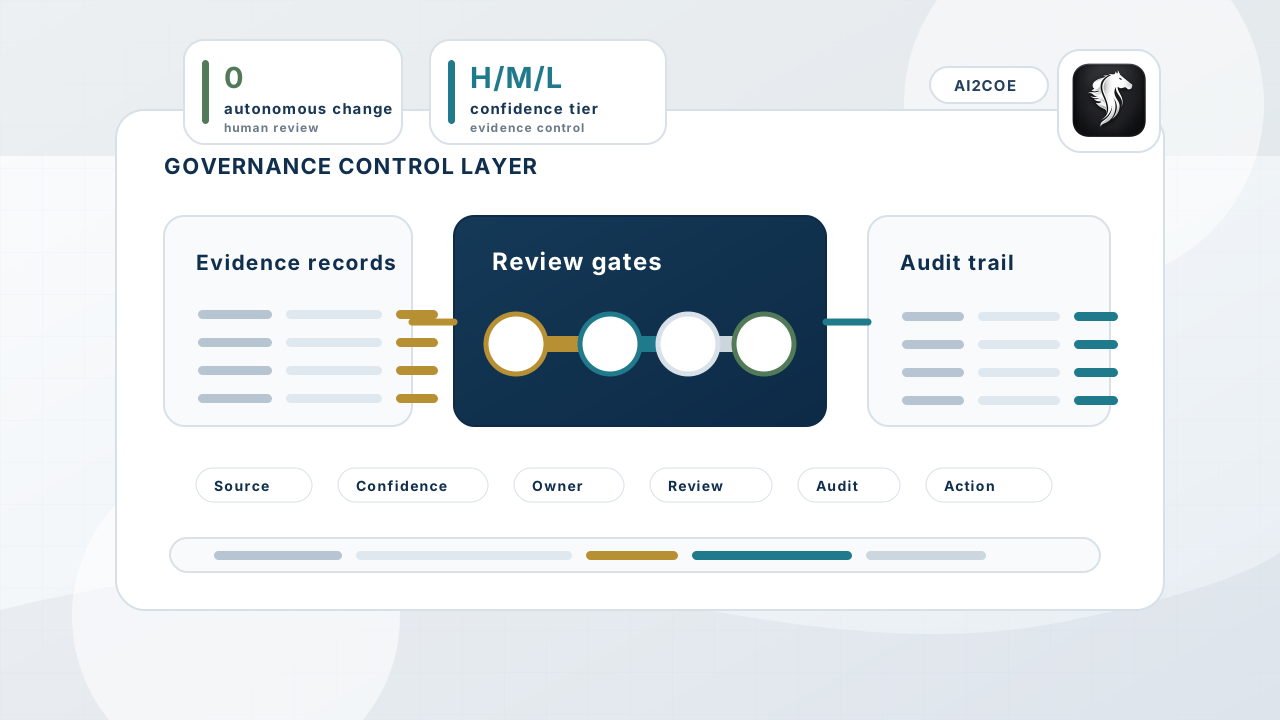
Confidence tiers prevent the platform from treating all findings as equal. High-confidence findings can be prioritized, while medium, low, and needs-review findings stay in a controlled human-review queue.

No write-backDiagnostic-first posture
Human reviewOwner-controlled action
EvidenceSource-backed reports
Evidence summary

Trust and governance guide

Confidence Tiers: The Trust Center explains the control posture behind Industrial IQ so enterprise buyers can inspect data handling, review boundaries, and evidence discipline before adoption. Confidence tiers prevent the platform from treating all findings as equal. High-confidence findings can be prioritized, while medium, low, and needs-review.

Review Trust Controls
Review ownerCISO, CIO, legal, procurement, governance, data owners, and executive sponsors evaluating diagnostic boundaries
Input file contextUpload lifecycle, authentication, retained metadata, report ownership, audit events, policy documents, and data-handling commitments.
Diagnostic evidenceA trust view of no ERP write-back, human review, confidence tiers, source-data handling, report ownership, and governance limits.
Recommended actionReview the controls, then use Snapshot or sample reports to inspect the evidence model before private upload.
Control purpose

Confidence Tiers protects executive decisions.

Confidence tiers prevent the platform from treating all findings as equal. High-confidence findings can be prioritized, while medium, low, and needs-review findings stay in a controlled human-review queue.

Related Industrial IQ engines
PartsCleanse AIGovernanceMind AIReliabilityMind AI
Governance controls

What leadership should verify.

ControlHow Industrial IQ handles it
Tiered scoringFindings are classified by evidence quality, completeness, and analyzer confidence.
False-positive controlIndustrial discriminator checks reduce unsafe duplicate consolidation.
Review routingLower-confidence findings are explicitly marked for owner validation.
Buyer committee relevance

How this control should be used in an enterprise review.

Use this trust control to align the buying committee before the diagnostic starts. Industrial IQ is designed to provide evidence, confidence tiers, executive reports, score history, and accountable actions while preserving source-system boundaries and reviewer control.

CIO / ERP

System boundary

Confirms Industrial IQ begins with exported operational data and does not create an uncontrolled change path into SAP, Maximo, Oracle, EAM, CMMS, procurement, or inventory systems.

CISO / Legal

Data handling boundary

Validates the difference between source-file purge after report generation and governance metadata that may be retained for ownership, score history, quota usage, feedback, and audit controls.

Operations

Action boundary

Keeps findings in a human-review workflow so maintenance, procurement, finance, and reliability owners can accept, reject, defer, or request more evidence before action.

Recommended review sequence

Move from trust question to governed diagnostic decision.

Security, ERP, operations, procurement, and finance teams use this review sequence to agree on the diagnostic boundary before data is uploaded. It turns the trust control into a practical buyer checklist, so the team knows what evidence is being evaluated, who owns the decision, and what Industrial IQ will not do on its own.

That discipline matters because industrial data findings can affect master-data cleanup, spares availability, procurement behavior, working capital, audit posture, and ERP migration planning. The safest path is to inspect exported operational data first, then route confidence-tiered findings through human review before any remediation work starts.

1. Confirm diagnostic scope Document which exported files will be used, which Industrial IQ engine will run, which fields are required, and which buyer roles must review the output before any operational recommendation is considered.
2. Separate evidence classes Keep benchmark assumptions, synthetic sample findings, and uploaded-data findings visibly separate. A diagnostic report should show source context, confidence tier, reason code, and limitation notes before a finding becomes action-ready.
3. Assign review ownership Route findings to finance, operations, procurement, maintenance, ERP/data, or governance owners based on the risk being evaluated. Industrial IQ supports accountable review; it does not replace the buyer's approval workflow.
4. Decide the next controlled action Use the report to decide whether to clean data, prepare an ERP migration, investigate inventory exposure, review procurement leakage, or defer action until more source data is available. Source-system changes remain buyer-controlled.
FAQ

Buyer questions for this trust control.

What does Confidence Tiers mean in Industrial IQ?

Confidence tiers prevent the platform from treating all findings as equal. High-confidence findings can be prioritized, while medium, low, and needs-review findings stay in a controlled human-review queue.

Does Industrial IQ replace ERP, EAM, CMMS, or procurement systems?

No. Industrial IQ sits above exported operational data and produces evidence, scores, reports, actions, score history, and governance without replacing or writing back to source systems.

What should a buyer do next?

Use this trust control to align governance expectations, then run the relevant Industrial IQ diagnostic engine or Industrial IQ Snapshot.

AI2COE Copilot