Enterprise AI adoption in industrial operations follows a predictable failure pattern. An organization identifies an AI opportunity — predictive maintenance, procurement optimization, inventory intelligence. It procures a platform. It works through months of data integration, change management, and organizational alignment. At some point — often 12 to 18 months after the initial investment — it discovers that the data quality underlying the AI model is insufficient to generate reliable recommendations. The program is paused. The vendor is re-engaged. The timeline extends.
The failure was not in the AI technology. It was in the sequence. The organization committed to a transformation before it had evidence that the data was ready to support one.
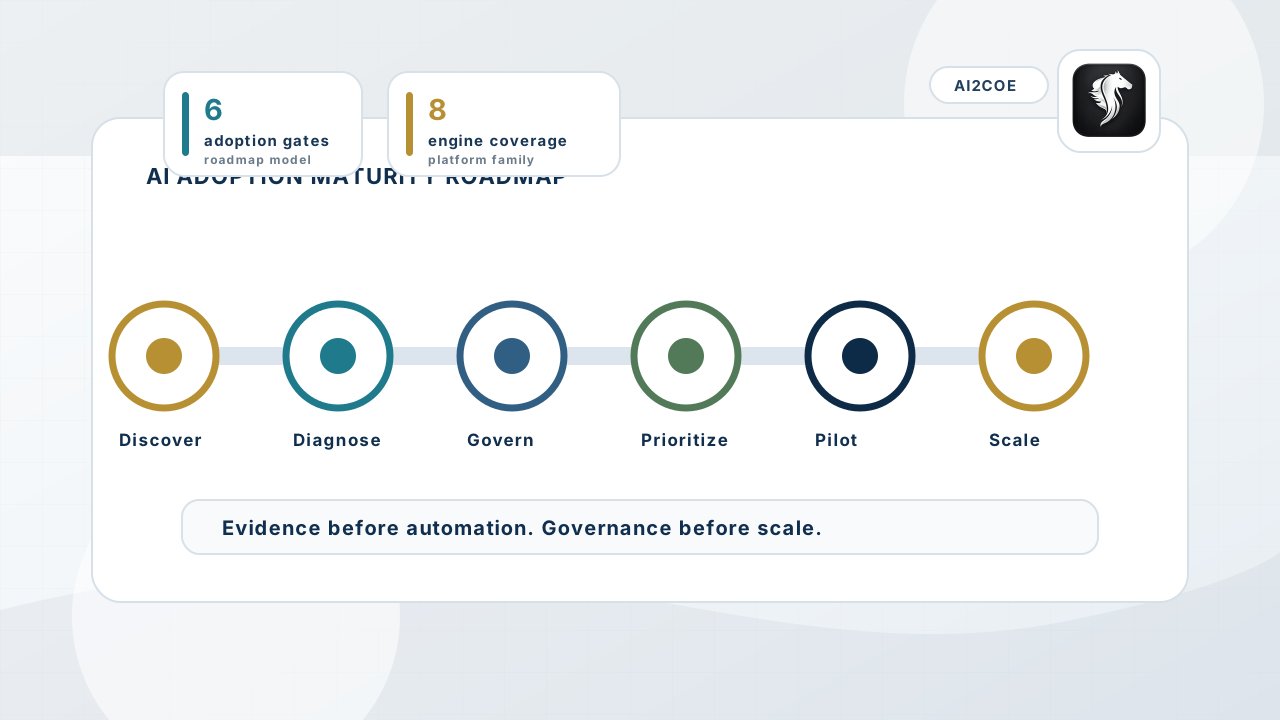
A diagnostic-first approach reverses the sequence at every decision point. Before committing to a predictive maintenance platform, run a diagnostic on work-order history to quantify the failure-pattern evidence in the current CMMS. Before deploying a procurement optimization system, run a spend diagnostic to quantify the price variance and supplier fragmentation already visible in purchase-order data. Before investing in inventory optimization AI, run a catalog diagnostic to quantify the duplicate exposure that is distorting the demand signals the AI would rely on.
Each diagnostic produces a finding. The finding is not a recommendation to buy a platform. It is evidence about a specific operational data problem: what it looks like, how large it is, which categories carry the highest exposure, and what level of governance is required to address it. That evidence changes the quality of every subsequent decision.
For MRO catalog quality, the diagnostic is the CSV upload. An organization exports its spare-parts item master from SAP, Maximo, Oracle, or any site-level system. The diagnostic identifies duplicate families, applies false-positive controls, quantifies capital at risk, and returns a tiered evidence pack. The entire process happens without ERP integration, without a transformation program, and without a transformation budget.
Diagnostic before transformation is not a product feature. It is a governance standard for AI adoption. Every organization that has spent capital on enterprise AI without first producing a credible finding has learned the same lesson. The diagnostic-first approach applies that lesson before the spend — which is the only point at which it changes the outcome.