Can predictive maintenance work if spare-parts history is split across duplicates?
Pharmaceutical buyers do not search for generic AI transformation when the operating problem is live. They search for evidence around predictive maintenance data readiness: how large the issue is, which owners should review it, and whether it can be proven without a long ERP or consulting project.
The buyer evaluation model shows that Predictive maintenance depends on trusted asset, work-order, and parts history; duplicate MRO records weaken that evidence chain. In Pharmaceutical, the relevant asset context is validated production equipment, clean utilities, labs, packaging lines, facilities, and controlled maintenance stores. The language that wins attention is not abstract automation; it is capital exposure, downtime risk, procurement leakage, and governance readiness translated into finance, operations, procurement, and CIO governance terms.
The buyer committee usually includes Reliability / AI Program Lead, maintenance or reliability ownership, procurement, master-data governance, and finance. Each role needs a different proof layer: duplicate-family evidence for operations, exposure values for finance, supplier and item fragmentation for procurement, and no-write-back control for technology leadership.
Industrial IQ routes Pharmaceutical teams to the engine that matches the operating question. Catalog issues use PartsCleanse AI, inventory issues use InventoryMind AI, procurement issues use ProcureMind AI, and finance, asset, reliability, readiness, and governance questions use their corresponding engines. The diagnostic converts Duplicate-risk planning lens into a decision-ready report with mapped source evidence, owner review, and clear next actions.
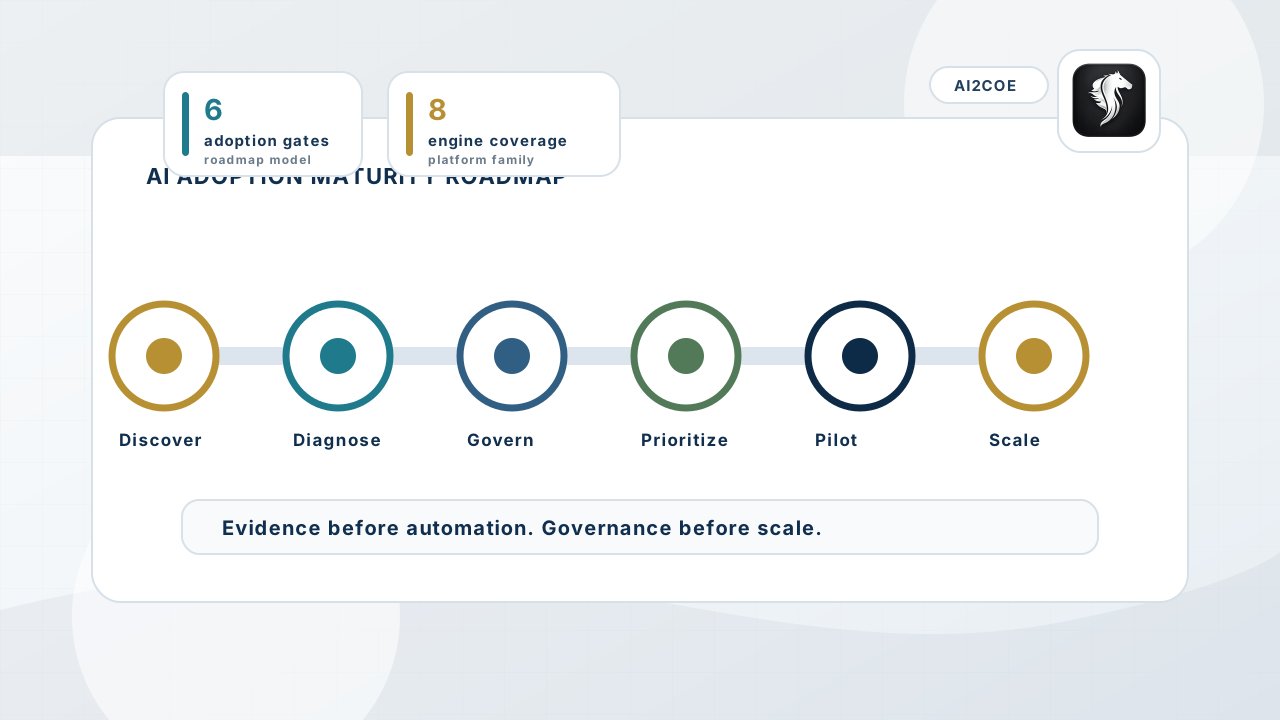
The practical next step is not to debate AI in principle. It is to run a diagnostic on the current catalog, review the findings by confidence tier, and decide whether the value is material enough for remediation, governance, or a larger AI adoption workstream.