ICP buying question

Where can industrial AI copilots safely improve maintenance execution?

Oil & Gas leaders are no longer asking whether AI is interesting. They are asking where AI can be trusted, measured, governed, and connected to operational value. The live buying trigger is s/4hana, turnaround readiness, or working-capital review, and the operating context is upstream assets, midstream terminals, refineries, turnaround stores, and HSE-critical spares.

The Force Team position on agentic maintenance workflows is direct: Agentic maintenance only works when the agent can trust the parts catalog, asset context, work-order history, and escalation rules behind each recommendation. For this industry, the executive translation must connect AI to capital exposure, uptime risk, procurement leakage, and governance readiness, not to abstract technology adoption.

The primary ICP is Maintenance / Reliability Leader. That buyer needs three proof layers before acting: a value signal finance can defend, a data-readiness signal technology can govern, and an operating signal the field or business unit can validate.

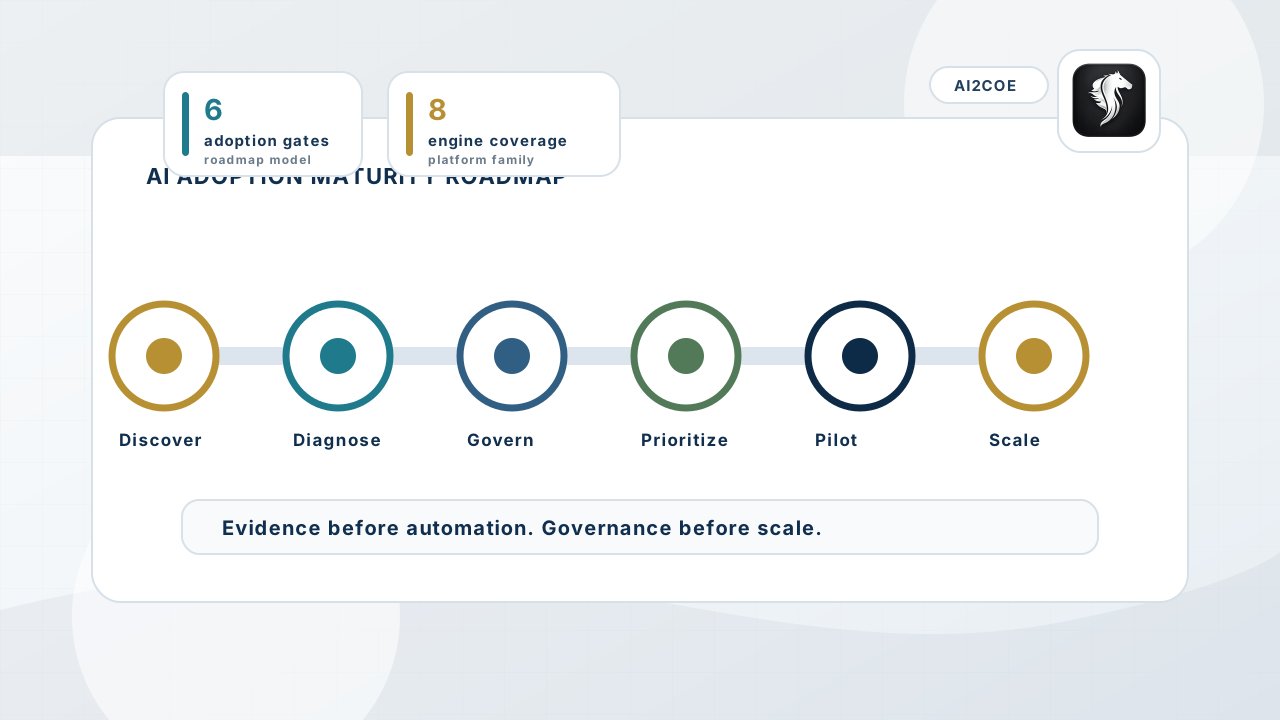
AI2COE's diagnostic-first model gives Oil & Gas organizations a safer entry sequence. PartsCleanse AI proves one high-value data problem first: duplicate and fragmented MRO catalog records. That first product creates the evidence discipline required before predictive maintenance, procurement intelligence, copilots, digital twins, or broader agentic AI workflows are scaled.

The recommended path is to diagnose the current data layer, quantify the business exposure, govern the review, and then decide whether Industrial AI copilots for planning, parts lookup, work-order triage, and reliability actions deserves a pilot. This keeps AI from becoming a platform purchase without an accountable operating result.

Force Team recommendation: Do not fund a broad AI program until the business can name the owner, value signal, data boundary, governance rule, and first diagnostic proof point.