What should the board ask before approving industrial AI spend?
Short answer: Board AI Scorecard is appropriate for Food & Beverage only when the business can connect the use case to trusted source data, accountable ownership, reviewable evidence, and a clear governance boundary.
Food & Beverage leaders are no longer asking whether AI is interesting. They are asking where AI can be trusted, measured, governed, and connected to operational value. The live buying trigger is line uptime, sanitation readiness, or packaging reliability program, and the operating context is packaging lines, refrigeration, hygienic pumps and valves, conveyors, sanitation windows, and plant utilities.
The enterprise decision view on board AI scorecard is direct: The board needs a scorecard that separates proven value, data readiness, risk controls, owner accountability, and scale readiness. For this industry, the executive translation must connect AI to capital exposure, uptime risk, procurement leakage, and governance readiness, not to abstract technology adoption.
The primary accountable sponsor is CEO / Board / CFO. That sponsor needs three proof layers before acting: a value signal finance can defend, a data-readiness signal technology can govern, and an operating signal the field or business unit can validate.
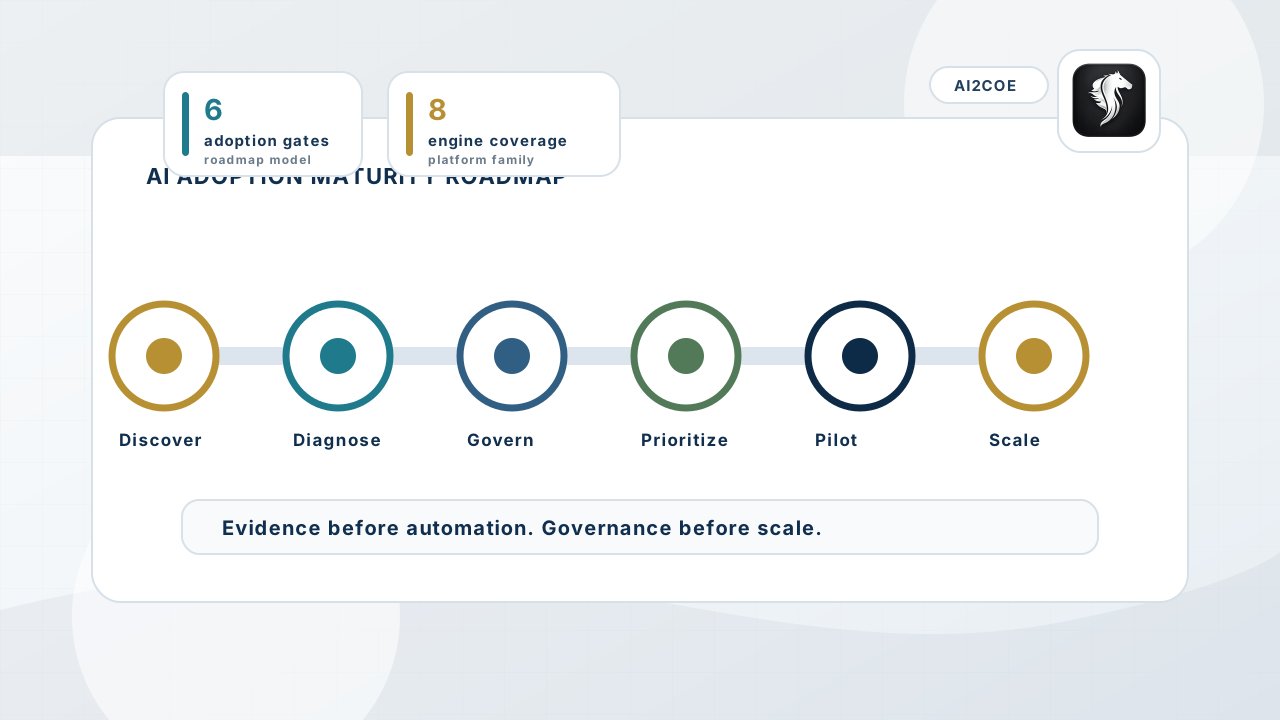
AI2COE's diagnostic-first model gives Food & Beverage organizations a safer entry sequence. Industrial IQ selects the engine that matches the operating question: catalog, inventory, procurement, finance, asset, reliability, readiness, or governance. The same evidence discipline is applied before predictive maintenance, procurement intelligence, copilots, digital twins, or broader agentic AI workflows are scaled.
The recommended path is to diagnose the current data layer, quantify the business exposure, govern the review, and then decide whether board-ready AI governance and performance scorecard deserves a pilot. This keeps AI from becoming a platform purchase without an accountable operating result.