Compatible with SAP  ·  IBM Maximo  ·  Oracle ERP  ·  Hexagon EAM  ·  Infor  ·  Any CMMS — Run an Industrial IQ diagnostic →
Oracle Buyer Intent

Oracle MRO inventory deduplication for EBS and Fusion item masters.

Oracle item masters often carry duplicate spare-parts records across inventory organizations, legacy EBS sites, and supplier-driven item creation. PartsCleanse AI gives Oracle teams a diagnostic-first path that avoids integration risk.

Buyer Experience Map

Oracle MRO Inventory Deduplication should lead to a diagnostic, not another reading session.

The page now gives buyers the same four-step experience: understand the problem, see the data required, inspect the report output, and choose the safest next diagnostic path.

1ProblemIdentify duplicate MRO inventory items across Oracle EBS, Oracle Fusion, inventory organizations, supplier aliases, UOM variation, and manufacturer part numbers.
2DataCSV or workbook exports from ERP, EAM, CMMS, inventory, procurement, asset, or work-order systems.
3ProofEvidence table, confidence tier, score, report output, and governance boundary.
4ActionRun Industrial IQ Snapshot or the mapped engine-specific diagnostic.
Primary CTARun Industrial IQ Snapshot
Trust boundaryNo ERP write-back, no autonomous master-data changes, and human-reviewable findings.
Next assetSample report, methodology, documentation, or required fields by engine.
ICP Experience Console

Oracle MRO Inventory Deduplication should answer the buyer's first five questions without a sales call.

Enterprise buyers do not evaluate Industrial IQ as one person. Finance, operations, procurement, maintenance, ERP, security, and board sponsors each need a different proof path. This console gives every ICP a fast route to the right engine, data requirement, output, and trust control.

Force Team UX model

Find my role. Pick my engine. See the data. Trust the output. Act safely.

Buyer identityChoose the role that owns the decision so the page presents value, risk, proof, and objection handling in the right language.
Industry contextMatch the diagnostic pack to sector-specific operating reality instead of forcing every buyer through a generic product story.
Data requiredShow minimum viable upload, best upload, sample datasets, field mapping, and what happens when fields are missing.
Output proofExpose sample reports, evidence tables, confidence tiers, score interpretation, action tracker, and score history before private upload.
Trust boundaryKeep no ERP write-back, human review, confidence tiers, audit evidence, and sample-versus-uploaded-data labeling visible near the CTA.
Executive answer

Oracle MRO Inventory Deduplication -- what leaders need to know.

Why Oracle item masters fragment

Why Oracle item masters fragment

Legacy EBS implementations, Fusion migration, inventory organization autonomy, supplier item aliases, and inconsistent UOM conventions create multiple records for the same spare part.

What the diagnostic produces

What the diagnostic produces

Duplicate-family groups, confidence tiers, value exposure, procurement leakage signals, and a clean review baseline for owner-approved remediation.

Where it fits

Where it fits

Use it before Oracle migration, procurement cleanup, inventory optimization, or enterprise data-governance programs.

AI2COE decision model

From search query to governed diagnostic.

Question

Is the catalog problem material enough to justify action?

Benchmark

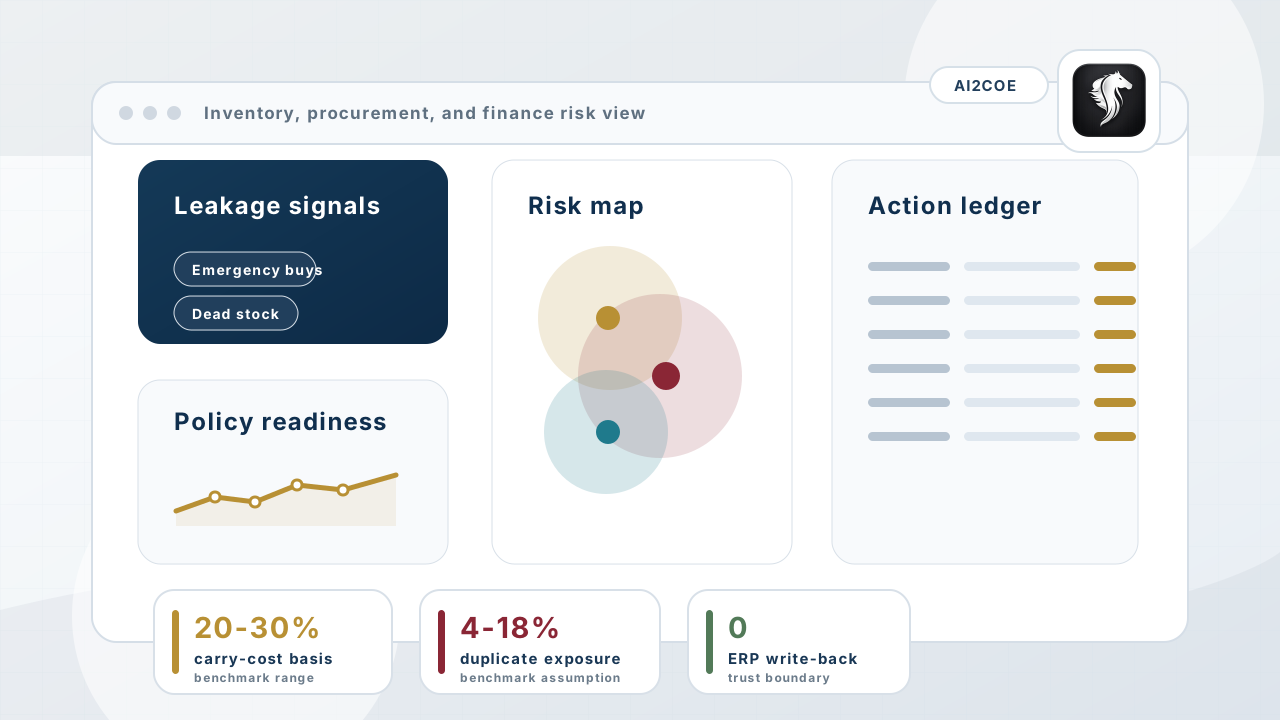
Use the scorecard to estimate duplicate exposure and carrying-cost drag.

Evidence

Run PartsCleanse AI to identify actual duplicate families and confidence tiers.

Governance

Route findings to owners before any ERP record is retired or consolidated.

Answer-ready brief

The concise answer this page gives enterprise buyers.

Oracle item masters often carry duplicate spare-parts records across inventory organizations, legacy EBS sites, and supplier-driven item creation. PartsCleanse AI gives Oracle teams a diagnostic-first path that avoids integration risk.

What it solvesIdentify duplicate MRO inventory items across Oracle EBS, Oracle Fusion, inventory organizations, supplier aliases, UOM variation, and manufacturer part numbers.
Who should careCFOs, procurement heads, maintenance leaders, CIOs, and master-data owners who need evidence before committing budget.
Why nowERP migrations, inventory-reduction programs, AI initiatives, and procurement cleanups expose catalog debt that was previously hidden.
What happens nextRun the diagnostic, review duplicate-family evidence, route findings to owners, and only then approve remediation action.
FAQ

Buyer-ready questions.

Does Oracle integration need to be configured?

No. PartsCleanse AI starts from a CSV export.

Can Oracle inventory organizations be analyzed?

Yes. Inventory organization, subinventory, site, and valuation fields improve reporting.

Is this an Oracle MDM replacement?

No. It is a diagnostic evidence layer before remediation or governance tooling.

AI2COE Copilot