Works from CSV or workbook exports produced from SAP, IBM Maximo, Oracle ERP, Hexagon EAM, Infor, and other ERP, EAM, or CMMS systems. No direct integration or write-back is required — Review data requirements →
Why Industrial Decision Intelligence

AI2COE Industrial IQ turns exported operational data into governed executive evidence.

ERP, EAM, CMMS, BI, procurement, and inventory systems hold useful records, but leadership still needs a disciplined way to diagnose value, risk, confidence, and action before transformation budgets are committed.

No write-backEvidence before ERP change
8 enginesExpansion across operating risk
RecurringScore history and action tracking
Evidence summary

Industrial IQ capability guide

Why Industrial Decision Intelligence: This Industrial IQ capability guide explains the operating question, evidence model, review boundary, and next action for the relevant platform workflow. Why AI2COE Industrial IQ exists: governed diagnostics, evidence, scores, executive reports, action tracking, and recurring improvement without ERP write-back.

Run Free Industrial IQ Snapshot
Review ownerIndustrial IQ evaluators, operating sponsors, data owners, and governance reviewers
Input file contextThe platform records, source exports, mappings, reports, score history, actions, and review context relevant to this capability.
Diagnostic evidenceA platform-specific view of how Industrial IQ converts exported data into evidence, reports, governed actions, and recurring visibility.
Recommended actionUse the page to understand the capability, then run Industrial IQ Snapshot or inspect sample reports.
Category thesis

Industrial transformation fails when action begins before evidence.

Industrial leaders are surrounded by system reports, but the reports rarely show which hidden conditions are worth funding first. Duplicate item masters, dead stock, emergency buying, weak asset-to-part linkage, work-order readiness gaps, and immature governance controls sit across different exports and ownership boundaries.

AI2COE Industrial IQ creates a common diagnostic operating model: upload data, map fields, validate quality, run deterministic engines, review source-backed evidence, quantify business impact, generate executive reports, assign actions, and track improvement over time.

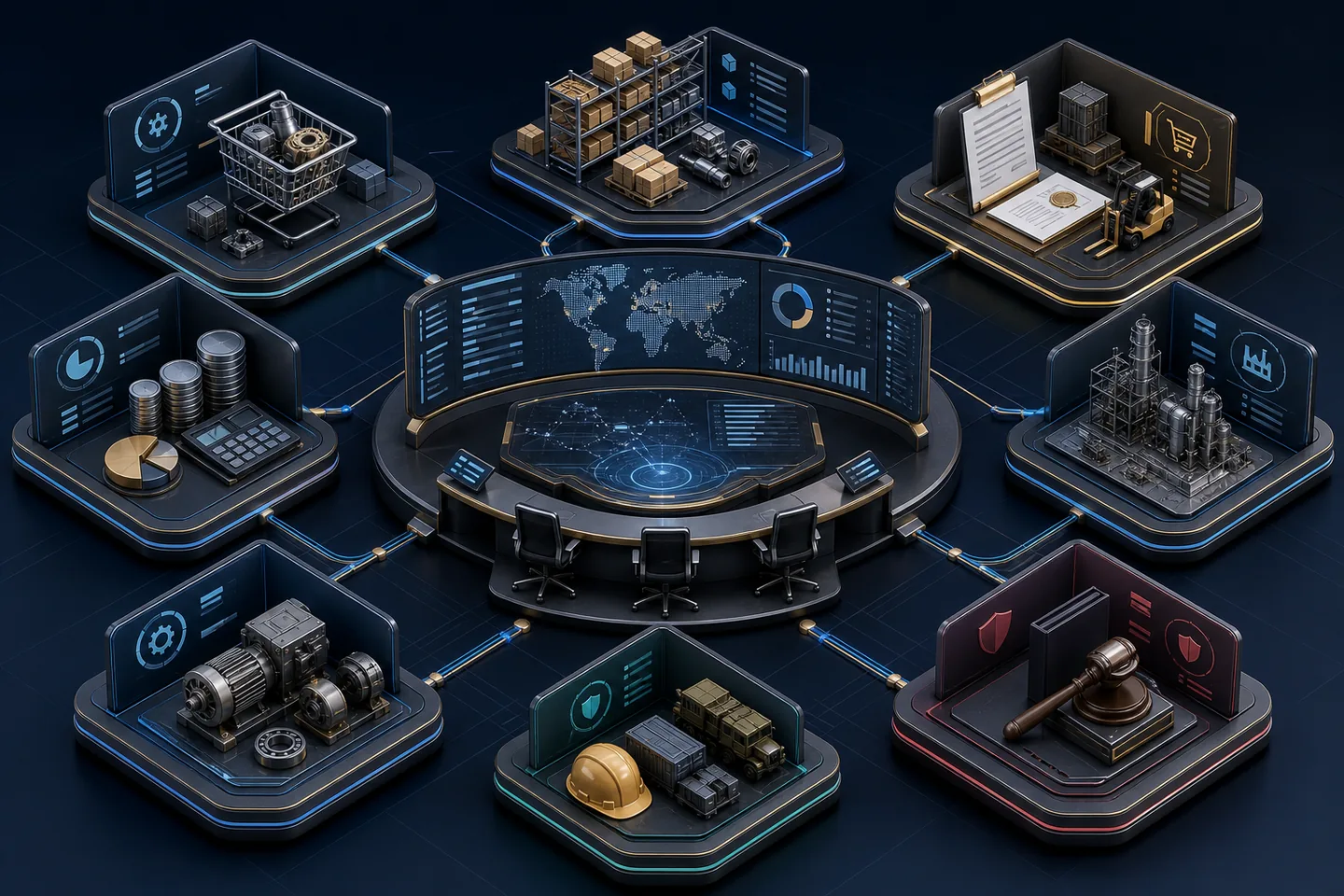
Platform lens: Industrial IQ is an eight-engine diagnostic platform. PartsCleanse AI supports catalog intelligence, while InventoryMind AI, ProcureMind AI, FinanceMind AI, AssetMind AI, ReliabilityMind AI, ReadyMind AI, and GovernanceMind AI cover the adjacent operating decisions.
Platform expansion model

One diagnostic pattern, eight engines.

Industrial IQ engineDecision domainPrimary owner
PartsCleanse AIMRO Catalog DiagnosticCFO, CIO, Procurement, Maintenance, and Materials leaders
InventoryMind AIInventory Risk DiagnosticCFO, COO, Inventory, Materials, and Supply Chain leaders
ProcureMind AIProcurement Leakage DiagnosticCPO, Procurement Director, CFO, and Supply Chain leaders
FinanceMind AIWorking Capital DiagnosticCFO, Finance Head, Procurement, and Board advisors
AssetMind AIAsset-to-Part DiagnosticAsset Integrity, Maintenance, Reliability, and Operations leaders
ReliabilityMind AIReliability Readiness DiagnosticMaintenance Director, Reliability Manager, COO, and Plant leaders
ReadyMind AIAI Readiness DiagnosticCIO, CTO, COO, Data Governance, and AI Transformation leaders
GovernanceMind AIGovernance DiagnosticCISO, CIO, Audit, Governance, and Transformation leaders
Why now

ERP modernization, AI adoption, and working-capital pressure create the same requirement: defensible evidence.

ERP programs

Bad data becomes migration risk

SAP, Maximo, Oracle, EAM, and CMMS initiatives expose material-master, item-master, and asset-linkage issues that are expensive to discover late.

Finance pressure

Inventory must defend capital

CFOs need more than a benchmark. They need evidence linking duplicate inventory, carrying cost, emergency procurement, and recoverable exposure.

AI governance

Autonomy requires confidence controls

Industrial AI should start with source-backed diagnostics, human review, audit trails, confidence tiers, and no uncontrolled ERP action.

Operating model

Operational Data -> Engines -> Evidence -> Scores -> Reports -> Actions -> History.

Industrial IQ sits above exported operational data. It does not replace SAP, IBM Maximo, Oracle, Infor, Hexagon EAM, CMMS, procurement tools, inventory systems, or BI dashboards. It creates the governed diagnostic layer those systems usually do not provide.

EvidenceSource records, mapped fields, analyzer reasons, and confidence tiers
ScoresEngine-specific health, risk, leakage, readiness, and governance signals
MRR pathRecurring uploads, score history, action tracker, benchmark comparison, renewal value report
Decision questions

Questions leadership should resolve before funding transformation.

What is Industrial Decision Intelligence?

Industrial Decision Intelligence is the governed layer between exported operational data and executive action. It turns catalog, inventory, procurement, finance, asset, maintenance, readiness, and governance data into evidence, scores, reports, actions, and recurring visibility.

Why is this different from ERP reporting?

ERP reporting usually describes the transaction system. Industrial IQ diagnoses hidden operational conditions across exports, such as duplicate records, inventory risk, procurement leakage, working-capital exposure, asset-to-part gaps, maintenance readiness, and governance evidence.

Why does AI2COE avoid ERP write-back?

Many industrial findings affect procurement, maintenance, finance, and audit controls. Industrial IQ produces source-backed recommendations and review queues, but it does not autonomously change master data or write back to SAP, Maximo, Oracle, EAM, CMMS, or procurement systems.

How do the eight Industrial IQ engines fit together?

The engines share one governed diagnostic model and apply it to different operating decisions: catalog quality, inventory risk, procurement leakage, working capital, asset-to-part readiness, reliability readiness, AI readiness, and evidence governance.