Works from CSV or workbook exports produced from SAP, IBM Maximo, Oracle ERP, Hexagon EAM, Infor, and other ERP, EAM, or CMMS systems. No direct integration or write-back is required — Review data requirements →
Buyer Guide

How to evaluate MRO catalog cleansing software.

A buyer-oriented comparison of MRO catalog cleansing software requirements: ERP safety, false-positive control, output evidence, report quality, and data retention.

Answer-firstDirect executive comparison
Diagnostic-firstEvidence before transformation
GovernedNo automatic ERP write-back
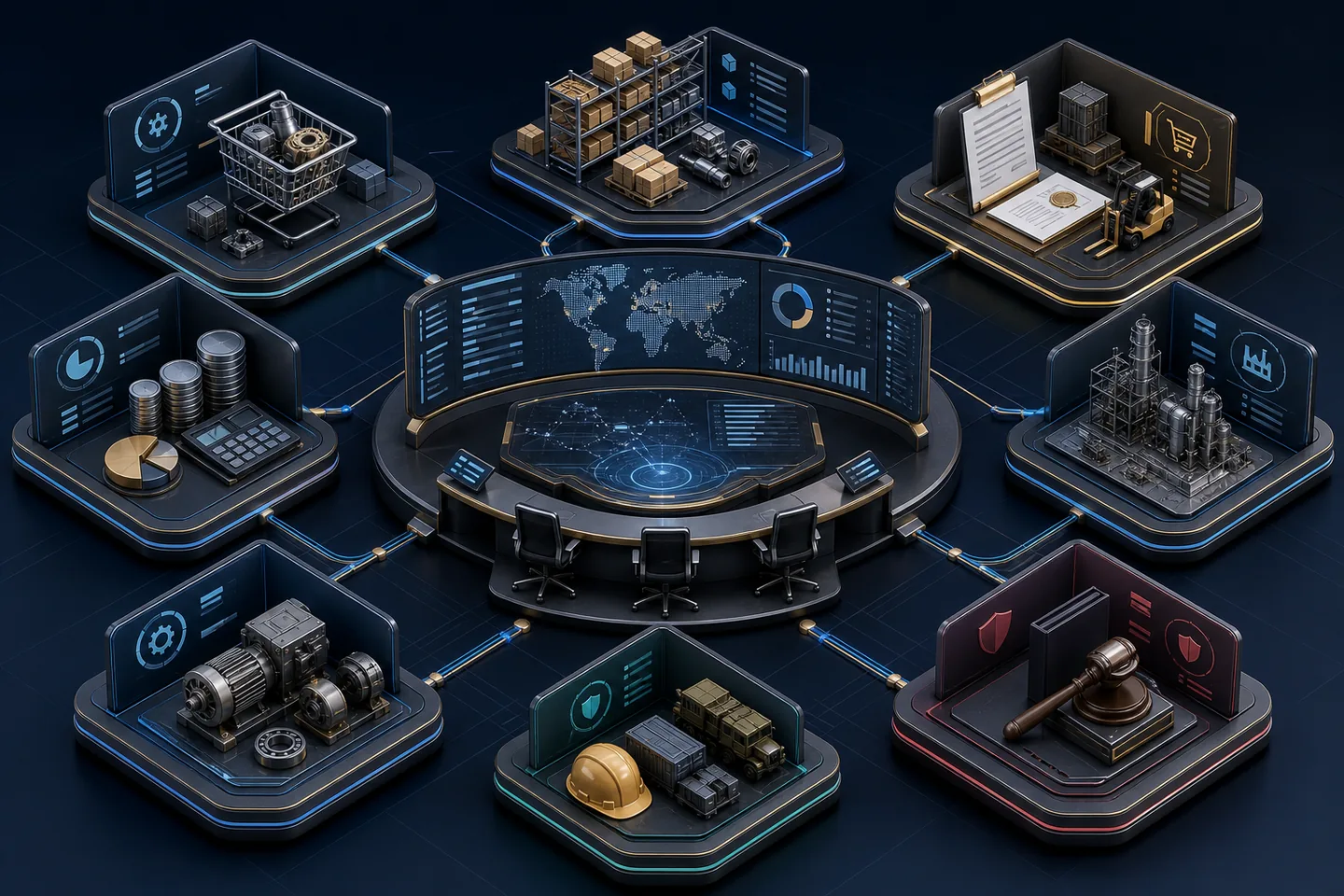
Industrial IQ eight-engine command map showing PartsCleanse, InventoryMind, ProcureMind, FinanceMind, AssetMind, ReliabilityMind, ReadyMind, and GovernanceMind feeding one evidence layer.
Eight Industrial IQ engines share one diagnostic model: mapped data, evidence, confidence tiers, reports, actions, and history.
What this helps you decide

MRO Catalog Cleansing Software Buyer Guide buying decision

The right MRO catalog cleansing software should start with a diagnostic, preserve review authority, explain confidence, quantify capital exposure, and avoid automatic ERP write-back. Tools that only return a similarity score are not sufficient for asset-intensive operators.

Who uses itBuyers comparing MRO data platforms, cleansing services, ERP governance, consulting, or AI diagnostics before committing budget.
Data neededCurrent catalog export, ERP or CMMS context, governance objective, buying committee questions, and approval criteria.
Next actionUse the comparison to decide whether diagnostic-first evidence should precede platform, remediation, or consulting spend.

Trademark note: third-party company and product names are used only for comparison and decision clarity. AI2COE and Industrial IQ are not affiliated with these companies unless explicitly stated.

Source register

Comparison provenance and procurement caveats.

This comparison is decision support. Procurement teams should verify current first-party vendor materials before selection. It is not affiliation, endorsement, certified performance, customer outcome evidence, or a public rank claim.

Date last materially reviewed2026-09-01
Claim areaSource registerHow to use it
AI2COE product boundary AI2COE public product, platform, trust, and sample-report pages. Shows what Industrial IQ claims about read-only diagnostics, no ERP write-back, reports, confidence tiers, and human review.
Alternative category positioning Current first-party vendor or category materials verified by the buyer during procurement. Keeps comparison language as buyer guidance rather than verified performance, market-share, certification, customer-proof, or affiliation claims.
Where AI2COE should not be selected Buyer needs live autonomous control, ERP write-back, full remediation services, certified compliance attestation, or a replacement for the source system. Prevents over-selling the diagnostic-first boundary.
Procurement questions Data access, source-file handling, write-back behavior, retention, review ownership, implementation effort, and report evidence. Gives procurement and security teams the questions to verify before selecting any path.
Change log Last material review: 2026-09-01; comparison slug: mro-catalog-cleansing-software-buyers-guide. Refresh whenever vendor claims, AI2COE scope, trust boundaries, or procurement requirements materially change.
Comparison matrix

How the options differ in practice.

DimensionAI2COE / PartsCleanse AIAlternative
First deliverableExecutive diagnostic evidence with value, confidence, and review routing.Many tools provide raw match lists or service-led findings.
False-positive controlsExplicit industrial discriminator logic for size, pressure, material, model, UOM, subtype, and category.Often generic NLP or manual review after matching.
Buyer alignmentCFO, procurement, maintenance, CIO, and master-data owners all get usable outputs.Often optimized for data teams only.
Data retentionSource files purged after report generation; summary metrics and Open Findings retained.Retention posture varies and may need separate negotiation.
Commercial fitSelf-serve diagnostic first, then paid report or unlimited plan.Often project-led with longer sales and implementation cycles.
Buyer decision table

When to use Industrial IQ first, when to use the alternative, and when both are needed.

Decision dimensionIndustrial IQ firstAlternative path
Best-fit use caseDiagnose exported operational data before transformation spendUse the alternative when the operating program is already approved and needs execution depth.
Time to first evidenceFree Snapshot or scoped diagnostic path from CSV/workbook exportsMay require implementation, integration, workshop cycles, or data-stewardship setup.
Input filesCurrent exports, owner context, and source-system categoriesUsually depends on platform-specific data models, connectors, or engagement scope.
ERP write-back riskRead-only diagnostic; no ERP write-back or autonomous remediationVaries by platform or service design and should be reviewed by CIO/CISO teams.
Human reviewConfidence tiers and owner review before actionReview model depends on the vendor workflow or buyer operating model.
Evidence traceabilityEvidence rows, reason codes, confidence, report, and action trackerMay be strong, but should be inspected before broad spend.
Executive report readinessBuilt for CFO, COO, CIO, procurement, maintenance, and governance reviewMay require advisory packaging or BI/report customization.
How both can work togetherIndustrial IQ proves priority, value, and governance firstThe alternative can execute the funded remediation, workflow, platform, or transformation program.
Decision scorecard

What the buying committee should decide from this comparison.

RoleDecision questionRecommended control
CFOCan value be quantified before budget is committed?Run the diagnostic first; use benchmark pages only for initial sizing.
COO / OperationsWill the output reduce operating risk without unsafe ERP edits?Use confidence tiers and owner review before any remediation.
CIO / Data GovernanceDoes the workflow preserve system control and auditability?Keep CSV-first, no write-back, source purge, and retained Open Findings.
ProcurementDoes the evidence expose supplier and item-master fragmentation?Prioritize duplicate families with high value, recurring demand, or supplier spread.
Decision boundary: Use this comparison to decide whether a governed diagnostic should come first. Customer-specific conclusions require uploaded data and owner review.
Decision boundaries

Where each option fits the buying sequence.

A serious enterprise buyer needs to know where each path fits, what evidence is missing, what governance risk remains, and whether the next dollar should fund discovery, remediation, platform implementation, or a diagnostic.

AI2COE position: diagnostic-first does not replace every platform or service. It protects the buying sequence by proving the size, confidence, and ownership of the problem before larger commitments are made.
Buying checkpoints
Alternative fitChoose a broader platform when workflow execution, stewardship, or remediation is already approved.
AI2COE firstChoose diagnostic evidence when the problem still needs source-backed sizing and owner review.
Use togetherUse diagnostic outputs to prioritize, govern, or justify a larger platform or services program.
Where the alternative is stronger Use the alternative first when the organization already needs enterprise-wide workflow, master-data stewardship, taxonomy enrichment, or implementation services beyond diagnostic proof.
What AI2COE does differently Use AI2COE first when the buyer still needs quantified exposure, confidence-tiered evidence, and a no-write-back diagnostic before committing larger budget.
When both should be used Run AI2COE before or alongside a broader platform when the team needs source-backed evidence to size remediation, prioritize data work, and brief finance, operations, procurement, and ERP owners.
Procurement questions Ask every vendor how it separates planning assumptions from uploaded-data results, how it prevents false positives, and what source data is retained after the run.
FAQ

Questions leadership teams should resolve clearly.

What should buyers ask first?

Ask whether the tool can prove value from a CSV export without ERP integration or automatic write-back.

What is the biggest risk in catalog cleansing software?

Unsafe false positives. A duplicate-looking part may not be interchangeable if size, pressure, material, model, or unit of measure differs.

Why does reporting quality matter?

Catalog cleanup needs budget and owner approval. Executive reports make the finding usable by finance, procurement, operations, and governance leaders.

Related Industrial IQ pages

Continue the comparison with evidence, trust, and diagnostic context.

AI2COE Copilot