Works from CSV or workbook exports produced from SAP, IBM Maximo, Oracle ERP, Hexagon EAM, Infor, and other ERP, EAM, or CMMS systems. No direct integration or write-back is required — Review data requirements →
Category Definition

Industrial Decision Intelligence vs APM: the data quality layer that APM programs require.

Asset Performance Management platforms require high-quality EAM data to deliver reliable analytics. Industrial Decision Intelligence provides the data quality governance and evidence layer that ensures APM investments deliver their promised value — rather than underdelivering on poorly governed operational data.

Answer-firstDirect executive comparison
Diagnostic-firstEvidence before transformation
GovernedNo automatic ERP write-back
Industrial IQ diagnostic dashboard showing AI readiness, risk, evidence confidence, and operational maturity indicators.
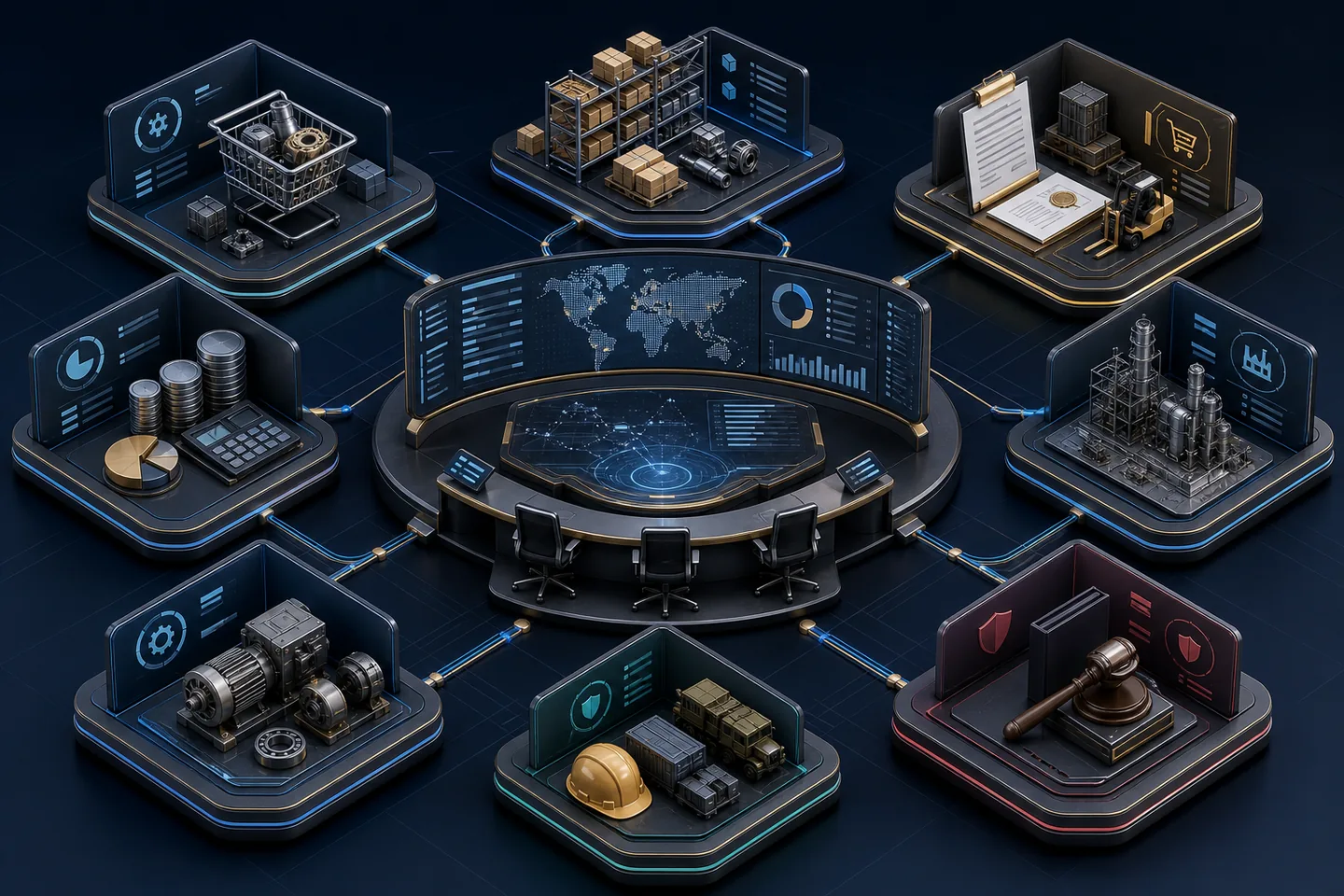
Eight Industrial IQ engines share one diagnostic model: mapped data, evidence, confidence tiers, scores, reports, actions, and history.
What this helps you decide

Industrial Decision Intelligence vs APM — Evidence Before Platform buying decision

Asset Performance Management (APM) platforms — including SAP APM, IBM Maximo Application Suite, Cognite, AVEVA Asset Performance Management, AspenTech Mtell, and C3 Predictive Maintenance — monitor asset health, predict failures, and optimize maintenance strategy. Industrial Decision Intelligence is the data quality governance and evidence layer that ensures the operational data feeding APM platforms is complete, consistent, and trusted — and that APM outputs are validated before operational action.

Who uses itBuyers comparing MRO data platforms, cleansing services, ERP governance, consulting, or AI diagnostics before committing budget.
Data neededCurrent catalog export, ERP or CMMS context, governance objective, buying committee questions, and approval criteria.
Next actionUse the comparison to decide whether diagnostic-first evidence should precede platform, remediation, or consulting spend.

Trademark note: third-party company and product names are used only for comparison and decision clarity. AI2COE and Industrial IQ are not affiliated with these companies unless explicitly stated.

Comparison matrix

How the options differ in practice.

DimensionAI2COE / PartsCleanse AIAlternative
Primary purposeMonitor asset health, predict failures, and optimize maintenance strategy using operational and sensor data.Govern the quality of operational data feeding APM systems and validate the evidence basis of APM-generated recommendations.
Data quality dependencyAPM analytics degrade when EAM data — equipment master, failure codes, work orders — is incomplete or inconsistent.IDI explicitly measures and governs EAM data quality as the prerequisite diagnostic before APM platform investment.
Entry requirementAPM deployment typically requires EAM integration, data contextualization, and model configuration.IDI requires CSV exports from existing EAM — producing diagnostic evidence in the same session.
AI output governanceAPM AI outputs may or may not include confidence tiers, human review, or audit trails — depends on platform design.IDI governance-first architecture mandates confidence tiers, human review, and audit trail for every output.
Sensor dependencyAdvanced APM analytics benefit from condition sensor data (vibration, temperature, oil analysis).IDI delivers significant maintenance intelligence from CMMS history alone — sensor data is an enhancement, not a requirement.
Investment sequenceAPM platforms require significant integration, configuration, and program investment before value is delivered.IDI delivers diagnostic evidence in days — providing the business case and data readiness baseline for APM investment decisions.
Executive reportingAPM platforms produce asset health dashboards and maintenance alerts.IDI produces executive-grade evidence reports in CFO, COO, and board language — connecting asset performance to financial and governance consequences.
Best sequenceRun IDI first to prove data readiness, quantify risk, and build the APM business case before platform investment.Use APM platforms when data readiness is confirmed, business case is built, and ongoing operational intelligence at scale is required.
Buyer decision table

When to use Industrial IQ first, when to use the alternative, and when both are needed.

Decision dimensionIndustrial IQ firstAlternative path
Best-fit use caseDiagnose exported operational data before transformation spendUse the alternative when the operating program is already approved and needs execution depth.
Time to first evidenceFree Snapshot or scoped diagnostic path from CSV/workbook exportsMay require implementation, integration, workshop cycles, or data-stewardship setup.
Input filesCurrent exports, owner context, and source-system categoriesUsually depends on platform-specific data models, connectors, or engagement scope.
ERP write-back riskRead-only diagnostic; no ERP write-back or autonomous remediationVaries by platform or service design and should be reviewed by CIO/CISO teams.
Human reviewConfidence tiers and owner review before actionReview model depends on the vendor workflow or buyer operating model.
Evidence traceabilityEvidence rows, reason codes, confidence, report, and action trackerMay be strong, but should be inspected before broad spend.
Executive report readinessBuilt for CFO, COO, CIO, procurement, maintenance, and governance reviewMay require advisory packaging or BI/report customization.
How both can work togetherIndustrial IQ proves priority, value, and governance firstThe alternative can execute the funded remediation, workflow, platform, or transformation program.
Decision scorecard

What the buying committee should decide from this comparison.

RoleDecision questionRecommended control
CFOCan value be quantified before budget is committed?Run the diagnostic first; use benchmark pages only for initial sizing.
COO / OperationsWill the output reduce operating risk without unsafe ERP edits?Use confidence tiers and owner review before any remediation.
CIO / Data GovernanceDoes the workflow preserve system control and auditability?Keep CSV-first, no write-back, source purge, and retained Open Findings.
ProcurementDoes the evidence expose supplier and item-master fragmentation?Prioritize duplicate families with high value, recurring demand, or supplier spread.
Decision boundary: Use this comparison to decide whether a governed diagnostic should come first. Customer-specific conclusions require uploaded data and owner review.
Decision boundaries

Where each option fits the buying sequence.

A serious enterprise buyer needs to know where each path fits, what evidence is missing, what governance risk remains, and whether the next dollar should fund discovery, remediation, platform implementation, or a diagnostic.

AI2COE position: diagnostic-first does not replace every platform or service. It protects the buying sequence by proving the size, confidence, and ownership of the problem before larger commitments are made.
Decision controls
FairnessState when the alternative is a better fit.
EvidenceShow what data must be uploaded before claims become customer-specific.
GovernanceRequire human review before operational action.
When the alternative should win Use the alternative first when the organization already needs enterprise-wide workflow, master-data stewardship, taxonomy enrichment, or implementation services beyond diagnostic proof.
When AI2COE should win first Use AI2COE first when the buyer still needs quantified exposure, confidence-tiered evidence, and a no-write-back diagnostic before committing larger budget.
What competitors will question They will ask whether a diagnostic is too narrow, whether remediation is complete, and whether results can scale. AI2COE must answer with evidence depth, governance boundary, and clear next-step workflow.
What buyers should ask Ask every vendor how it separates benchmark assumptions from uploaded-data results, how it prevents false positives, and what source data is retained after the run.
FAQ

Questions leadership teams should resolve clearly.

Does Industrial IQ replace APM platforms?

No. APM platforms provide ongoing asset health monitoring and performance analytics at scale. Industrial IQ provides the data quality diagnostic and evidence layer that ensures APM investments succeed — and the pre-investment business case that justifies them.

Why do APM programs underdeliver?

APM programs most commonly underdeliver because the EAM data quality — equipment master completeness, failure code consistency, work-order history integrity — feeding the APM analytics engine was not assessed and remediated before the program began. IDI addresses this prerequisite.

What APM platforms does Industrial IQ complement?

Industrial IQ complements SAP APM, IBM Maximo Application Suite, Cognite, AVEVA Asset Performance Management, AspenTech Mtell, C3 Predictive Maintenance, Bentley AssetWise, and any APM platform dependent on EAM data quality.

How does IDI build the APM business case?

IDI diagnostic output quantifies equipment master completeness rates, failure code classification quality, bad-actor asset concentration, and predictive maintenance data readiness — producing the evidence that justifies APM platform investment to CFO, CIO, and board sponsors.

How long does an IDI APM readiness diagnostic take?

An initial IDI APM readiness diagnostic can be completed from a CSV export within days — producing a baseline measurement of EAM data quality, bad-actor asset identification, and predictive maintenance readiness before any platform investment is evaluated.

Related Industrial IQ pages

Continue the comparison with evidence, trust, and diagnostic context.

AI2COE Copilot