Works from CSV or workbook exports produced from SAP, IBM Maximo, Oracle ERP, Hexagon EAM, Infor, and other ERP, EAM, or CMMS systems. No direct integration or write-back is required — Review data requirements →
ReliabilityMind AI

ReliabilityMind AI Maintenance Readiness Pattern

Representative product case-study pattern showing how ReliabilityMind AI connects work-order history, parts availability, false-stockout signals, and maintenance-delay evidence.

RepresentativeAnonymized pattern
Diagnostic-firstEvidence before remediation
Source-file purgeAfter report generation
Evidence summary

Buyer evidence resource

ReliabilityMind AI Maintenance Readiness Pattern: Use this page to understand the operating question, exported-data evidence path, review boundary, and next Industrial IQ action. Representative product case-study pattern showing how ReliabilityMind AI connects work-order history, parts availability, false-stockout signals, and.

Run Free Industrial IQ Snapshot
Review ownerExecutive sponsors, operating leaders, finance reviewers, procurement teams, maintenance owners, ERP/data leaders, and governance reviewers who need evidence before approving action.
Input file contextOperational CSV exports, item master fields, inventory, procurement, asset, work-order, finance, readiness, or governance data depending on the page.
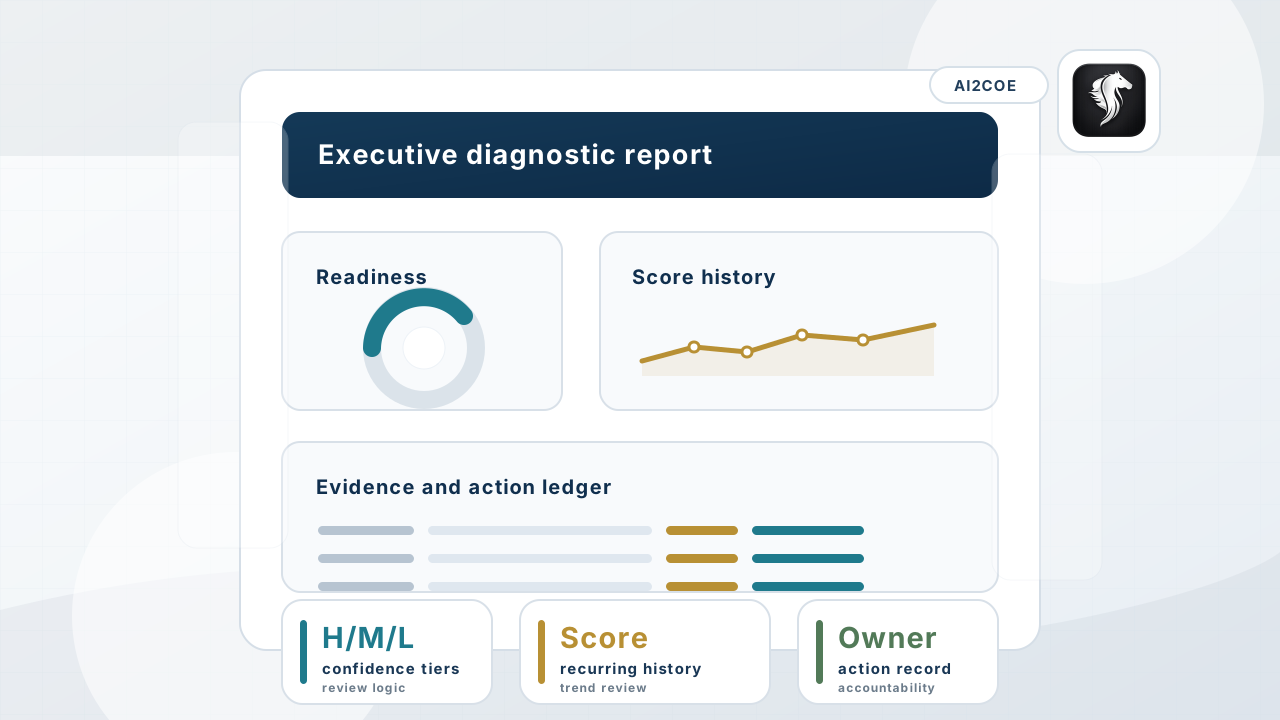
Diagnostic evidenceSource-backed evidence, scores, confidence tiers, report outputs, action tracking, score history, and governance context.
Recommended actionRun Free Industrial IQ Snapshot and select the diagnostic engine that matches the operating question.
Operating context

What the buyer is trying to decide.

A reliability and maintenance team needs to know whether planned work, repeat failures, shutdown readiness, and part availability are being constrained by poor data, inventory posture, or procurement leakage.

Reliability LeaderMaintenanceCOOPlannerInventory ManagerProcurement
Control evidence
  • Representative ReliabilityMind AI product pattern
  • Maintenance signals require human review
  • No CMMS or ERP write-back
  • Source-backed diagnostic evidence
Visual evidence map

How exported operational data becomes buyer-ready evidence.

Use this map to understand the diagnostic flow before reading the detailed posture change. It shows source context, evidence conversion, owner review, and safe action boundaries.

Source context

Files and context the diagnostic would inspect.

Work-order history
Asset register
Inventory balance
Parts-used context
Step 1 Source exports Read-only uploaded files
Step 2 Map and normalize Field fit, aliases, context
Step 3 Evidence table Reason codes and confidence
Step 4 Owner review Human decision before action
Evidence signal 1 Evidence output

Maintenance-delay, repeat-demand, false-stockout, and critical-spare readiness signals are routed by asset and owner.

Evidence signal 2 Decision output

Reliability, inventory, and procurement teams align on whether readiness risk is data, stock, or supplier driven.

Evidence signal 3 Trust posture

ReliabilityMind AI produces diagnostic signals; it does not approve maintenance changes or alter work orders.

Review roles

Who reviews the evidence.

Reliability LeaderMaintenanceCOOPlannerInventory Manager
Stage: No ERP write-back
Stage: Source files purged after report generation
Stage: Confidence-tiered evidence
Stage: Human review before action
Before / after diagnostic posture

The change AI2COE is meant to create inside the buying committee.

Before diagnostic
Maintenance viewWork orders, parts used, assets, failure codes, and stock position are reviewed separately.
Reliability concernDelay signals and false-stockout events are difficult to distinguish from actual part shortages.
Shutdown pressureCritical work packages need evidence before stocking or procurement changes.
After diagnostic
Evidence outputMaintenance-delay, repeat-demand, false-stockout, and critical-spare readiness signals are routed by asset and owner.
Decision outputReliability, inventory, and procurement teams align on whether readiness risk is data, stock, or supplier driven.
Trust postureReliabilityMind AI produces diagnostic signals; it does not approve maintenance changes or alter work orders.
Enterprise trust posture

Proof controls buyers expect before they upload operational data.

Source purge Uploaded source files are purged after report generation; summary metrics and Open Findings remain.
No ERP write-back The diagnostic creates evidence for review. It never changes, deletes, merges, or overwrites ERP records.
Local currency Reports display money in the user's selected or country-derived currency, while USD remains the base audit calculation.
Audit trail Report ownership, access, quota, and feedback events are retained for governed review.
Session downloads Excel, Word, PDF, and CSV downloads are available only in the active generation session.
Open Findings Browser findings remain available without retaining the original source catalog rows.
Buyer interpretation

This is the level of evidence a first paid pilot should produce.

The purpose of an Industrial IQ pilot is not to claim instant remediation. It is to create a defensible management fact base: source-backed findings, confidence distribution, exposure assumptions, readiness issues, and a review sequence that executives can govern.

Enterprise review lens

Use this page to decide the next evidence step.

Industrial IQ pages are designed to move enterprise buyers from operating pain to source-backed diagnostic evidence, not to force an immediate platform commitment.

Best-fit reader

Finance, operations, procurement, maintenance, reliability, ERP/data, security, and executive sponsors.

Evidence to prepare

Relevant ERP, EAM, CMMS, inventory, procurement, asset, work-order, or readiness exports where available.

Output to expect

A diagnostic route, sample proof format, report evidence, confidence tier, owner review path, or commercial next step.

Trust boundary

Read-only diagnostics, no ERP write-back, source-file purge after report generation, and human review before action.