Works from CSV or workbook exports produced from SAP, IBM Maximo, Oracle ERP, Hexagon EAM, Infor, and other ERP, EAM, or CMMS systems. No direct integration or write-back is required — Review data requirements →
Rail, Metro & Transit Agentic AI readiness

Is Rail, Metro & Transit ready for a rolling-stock maintenance-readiness review?

A practical decision guide for evaluating the evidence, authority, security, and human-review controls required before a bounded industrial agent pilot.

MethodologyNot a deployed industry agent
R2Recommended initial authority
Read-onlyNo operational write-back
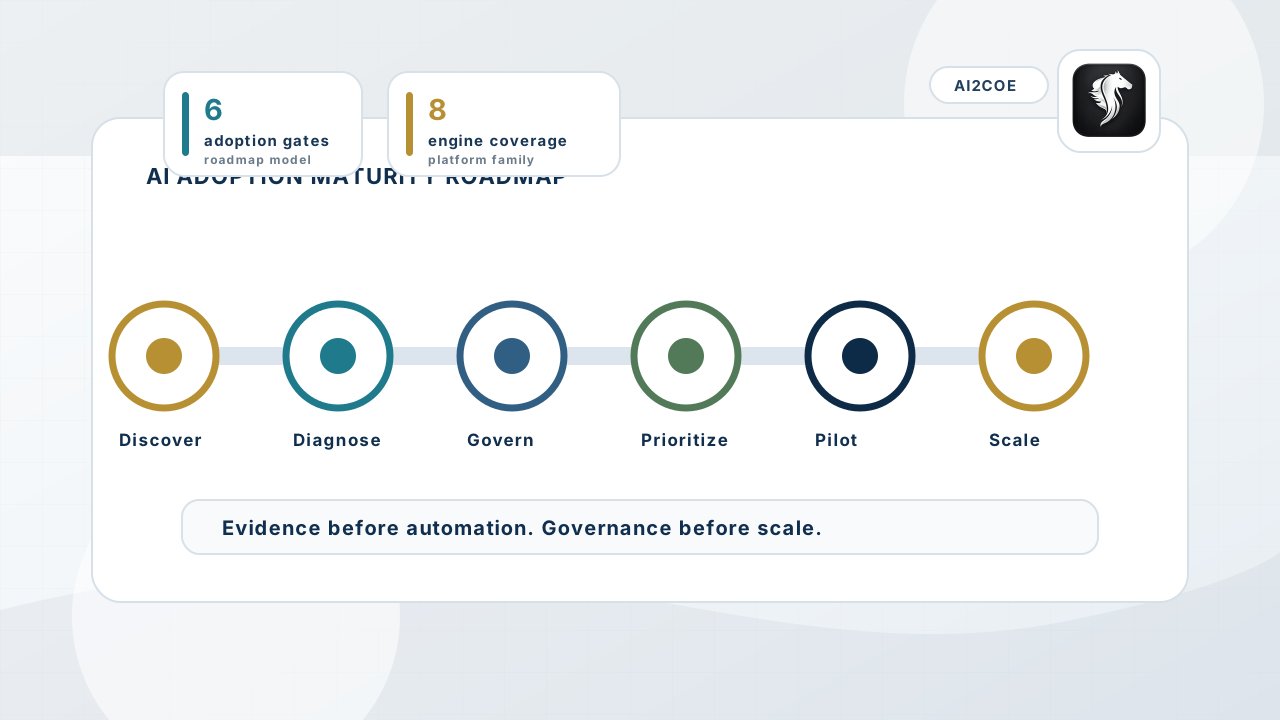
AI adoption maturity roadmap showing discovery, diagnostics, governance, pilot prioritization, and enterprise scaling stages.
Research pages separate benchmark assumptions from uploaded-data diagnostics and owner-reviewed action.
Operating problem

One decision: is this workflow suitable for bounded agency?

Where can industrial AI copilots safely improve maintenance execution?

The proposed goal is to rolling-stock maintenance-readiness review. The first decision is whether variable planning adds value beyond analytics, deterministic workflow, RPA, or a copilot.

Current product boundary: AI2COE diagnoses readiness and demonstrates a synthetic read-only evidence workflow. It does not currently run this industry workflow or change an operational system.
Data the agent must trust

Source and field readiness

fleet unit, depot, BOM, work order, spares, service plan, and criticality.

Context relationships

Industrial context graph

part supports rolling stock; work belongs to depot; service plan sets deadline.

Approved tools

Eight read-only Industrial IQ skills

Use only the required identity, inventory, procurement, finance, asset, reliability, readiness, and governance skills through a fixed allowlist.

Decision rights and human approval

R2 first; named owners decide what happens next.

ControlRail, Metro & Transit requirement
Accountable ownersFleet engineering, depot maintenance, materials, and operations owners
AllowedRetrieve approved information, analyse source-backed evidence, and recommend a review action.
Not allowedChange a material, purchase order, inventory position, supplier, asset, work order, production plan, or control system.
ApprovalAccept, reject, defer, assign, or request more data before any separate operational process begins.
Failure and security scenarios

Test the exceptions before trusting the workflow.

fleet variant mismatch, safety approvals, depot imbalance, and timetable pressure.

Source descriptions, supplier notes, work-order comments, documents, and tool output are untrusted data. They cannot change instructions, authority, permissions, or the skill allowlist.

AbstainWhen source evidence or critical context is insufficient.
EscalateWhen safety, quality, compliance, or authority boundaries are unclear.
TraceEvery material conclusion to source references, reason codes, confidence, and limitations.
AI2COE diagnostic support

ReadyMind and GovernanceMind coordinate the readiness decision.

ReadyMind AI evaluates use-case, data, context, ownership, tool, evaluation, and value readiness. GovernanceMind AI evaluates identity, authority, policy, evidence, review, and audit controls. The six domain engines contribute operating evidence for the selected use case.

Pilot evidence required

Approved synthetic or tenant-isolated data, source-fit results, fixed tool contracts, security tests, owner acceptance criteria, an evaluation plan, and an exit path are required before any controlled pilot discussion.

Run the readiness diagnostic
FAQ

Questions to resolve before a pilot.

Does AI2COE currently run a rolling-stock maintenance-readiness review?

No. This page defines a readiness and evidence method. AI2COE currently provides a controlled synthetic demonstration and does not execute operational actions.

What authority is recommended first?

R2: retrieve approved information, analyse evidence, and recommend an action for named human review.

What must be proven before a pilot?

Source fit, industrial context, skill and tool boundaries, unique identity, decision rights, human approval, injection controls, source-reference coverage, abstention, and evaluation readiness.

Does the workflow write to ERP, EAM, CMMS, inventory, procurement, or work-order systems?

No. The current AI2COE boundary is export-first and read-only, with no operational write-back.